Japanese and Chinese Foreign Ministers Hold First Meeting Since Relations Worsened
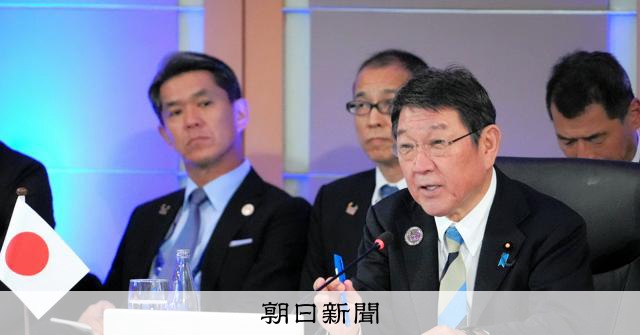
Japan's Foreign Minister Yoshimasa Hayashi and China's Foreign Minister Qin Gang held their first in-person meeting since bilateral relations deteriorated. The encounter took place on the sidelines of the ASEAN Regional Forum in Jakarta, Indonesia. This marks the highest-level diplomatic engagement between the two East Asian neighbors since a period of increased tension. The meeting aimed to address ongoing issues and explore potential avenues for improving the strained relationship. Specific details regarding the topics discussed or any agreements reached were not immediately disclosed. However, the exchange is seen as a crucial step in managing diplomatic ties amidst regional complexities. Both nations are key players in the Indo-Pacific, and their relationship significantly impacts regional stability and economic cooperation. The meeting's occurrence highlights the continued importance of dialogue, even when relations are challenging. Further diplomatic engagements are anticipated to gauge the prospects for a genuine improvement in Japan-China relations.
The meeting between the Japanese and Chinese foreign ministers represents a critical diplomatic maneuver in a region marked by significant geopolitical competition. While the encounter signifies a commitment to dialogue, the underlying structural tensions, including trade disputes and security concerns, remain unaddressed. The ASEAN Regional Forum provides a multilateral platform that can facilitate de-escalation, but the long-term trajectory of Japan-China relations will likely depend on reciprocal concessions and a shared understanding of regional governance frameworks. The immediate challenge is to translate this initial contact into concrete policy adjustments that can mitigate future friction and foster a more predictable bilateral environment. Future engagement will need to navigate the complex interplay of national interests, alliance dynamics, and the evolving global order.
AI-generated to prompt reflection — not editorial opinion, not advice, not a statement of fact. How this works.