Japanese researchers program curiosity into AI, enabling child-like learning
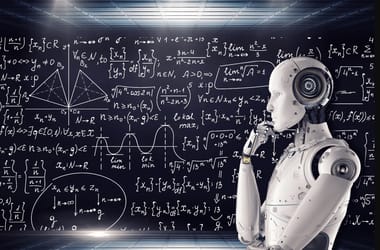
Researchers in Japan have developed a method to imbue artificial intelligence with curiosity, leading to significantly more effective learning, particularly in human language acquisition. This breakthrough allows AI systems to learn in a manner analogous to how a child learns. By integrating curiosity as a core component of the AI's programming, the robots demonstrate a heightened capacity to absorb and process information. The study suggests that this novel approach bypasses traditional, often slower, learning methods. The implications of this research could extend to various fields where AI is applied, promising faster and more intuitive AI development. The team's findings highlight the potential of leveraging intrinsic motivational drives, like curiosity, to enhance machine learning capabilities. This could pave the way for more sophisticated and adaptable AI systems in the future.
This development in programming curiosity into AI systems suggests a paradigm shift from purely data-driven learning to a more intrinsic, motivation-based approach. By mimicking a child's natural inquisitiveness, AI may overcome limitations in learning efficiency and adaptability. This could accelerate progress in areas like natural language processing and complex problem-solving. The long-term impact hinges on how effectively this curiosity can be managed and directed, ensuring alignment with human objectives and ethical considerations. As AI systems become more autonomous, understanding and controlling their internal motivational states will be crucial for safe and beneficial integration into society.
AI-generated to prompt reflection — not editorial opinion, not advice, not a statement of fact. How this works.