Japanese Students Walk Home Together Under Umbrellas, Shifting From COVID to Heat Protection
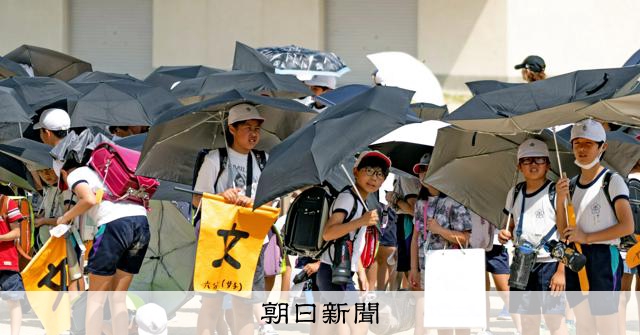
In the town of Inami, Hyogo Prefecture, a group of elementary school students has adopted the practice of walking home together under parasols. This initiative, which began during the COVID-19 pandemic, has now transitioned into a primary strategy for combating the summer heat. The students, from Inami Elementary School, found that walking together offered a sense of community and mutual support. Initially, the parasols were used as a measure to maintain physical distance and reduce the risk of virus transmission. However, as the pandemic's intensity waned and concerns about rising temperatures grew, the students and their guardians recognized the parasols' effectiveness in providing shade and preventing heatstroke. This adaptation highlights a shift in priorities, from public health concerns related to the virus to environmental challenges posed by climate change. The practice has become a familiar sight in the community, symbolizing a blend of past public health measures and present-day environmental adaptations. The collective walk home under parasols is now a cherished routine, fostering both safety and comfort for the students during their daily commute.
The practice of students walking home together under parasols, originating from COVID-19 social distancing measures and evolving into a heat mitigation strategy, illustrates adaptive behavior in response to public health and environmental shifts. This collective action, while seemingly simple, reflects a community's ability to repurpose existing social structures and behaviors to address emerging challenges. The transition from a pandemic-era health protocol to a climate adaptation tactic demonstrates a pragmatic approach to safety and well-being. Looking ahead, such localized, community-driven initiatives could offer scalable models for resilience in urban and suburban environments facing increasing heat stress due to climate change. The underlying incentive structure is one of shared responsibility and mutual benefit, fostering social cohesion while addressing practical environmental concerns.
AI-generated to prompt reflection — not editorial opinion, not advice, not a statement of fact. How this works.