Java Ring Reappears After Almost Three Decades
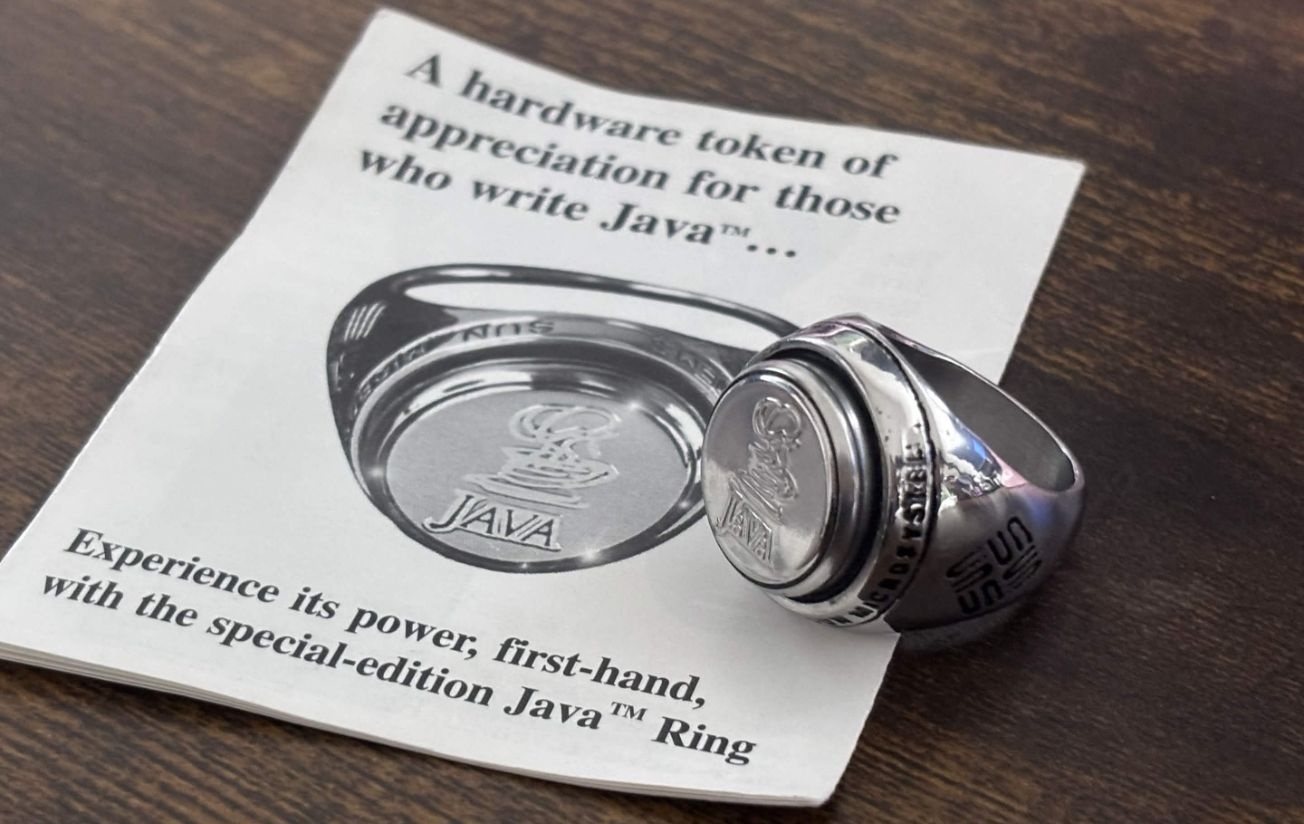
The Java Ring, a promotional item from the late 1990s, has resurfaced after nearly 30 years. During that era, Java was widely anticipated to dominate the programming landscape. The rings were distributed as part of a marketing campaign to promote the language's potential. The reappearance of the Java Ring after such a long period highlights its status as a relic from a specific moment in tech history. It serves as a tangible reminder of the intense optimism and speculation surrounding Java's future during its early days. The object's return prompts reflection on the evolution of programming languages and the often-unpredictable trajectory of technological trends. Many technologies that were once hyped as revolutionary have since faded, while others have endured or evolved in unexpected ways. The Java Ring's reappearance offers a nostalgic glimpse into the dot-com boom era and the fervent belief in Java's universal adoption.
The Java Ring's reappearance after nearly 30 years serves as a potent symbol of the cyclical nature of technological hype and the unpredictability of market adoption. In the late 1990s, Java was positioned as a transformative force, reflecting a period of intense optimism about the internet's potential and the dominance of specific software paradigms. The subsequent evolution of the tech landscape, marked by the rise of new languages and frameworks, demonstrates that market dominance is not predetermined but shaped by ongoing innovation, community support, and adaptation to changing computational needs. This historical artifact prompts consideration of how current technological trends, such as the rapid advancements in AI and specialized programming languages, might be viewed in retrospect decades from now, highlighting the importance of sustained relevance over initial promise.
AI-generated to prompt reflection — not editorial opinion, not advice, not a statement of fact. How this works.