Jet skis chase endangered whale and calf off Florianópolis beach
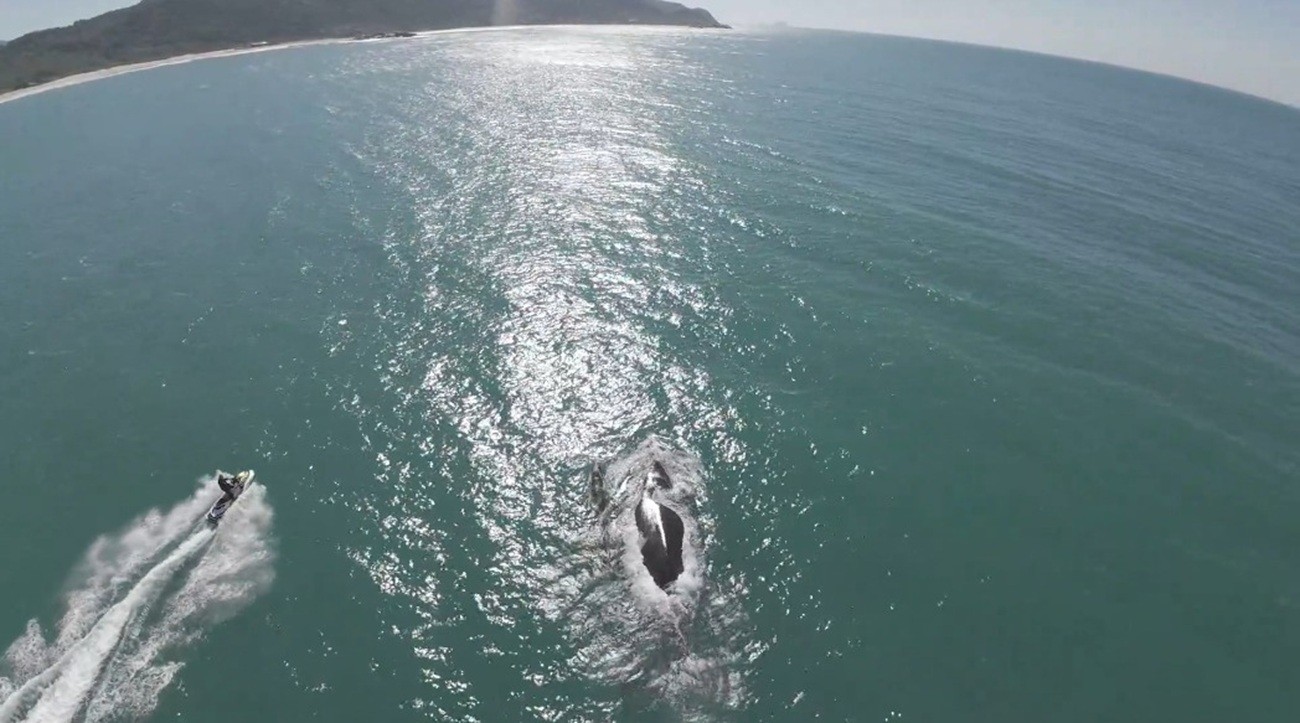
Bathers on jet skis were filmed deliberately approaching and chasing a mother southern right whale and her calf near Mole Beach in Florianópolis, Santa Catarina, Brazil. Drone footage captured on Sunday, July 19th, shows three watercraft getting close to the marine mammals, which are classified as an endangered species. This behavior is a violation of federal law in Brazil, which prohibits intentionally disturbing or approaching marine animals. The Brazilian Institute of Environment and Renewable Natural Resources (Ibama) and the Environmental Military Police are reportedly working to identify the individuals involved in the incident. Southern right whales are commonly sighted along the Santa Catarina coast between July and September as they migrate to warmer tropical waters for mating and reproduction, making the region a crucial breeding ground. The drone footage, recorded around 11 AM, shows the whales swimming towards Galheta Beach while still being pursued by the jet skis. The law, Federal Law 7.643/1987, specifically forbids the intentional harassment of cetaceans in Brazilian waters. Ibama regulations also stipulate that motorized vessels must maintain a minimum distance of 100 meters from whales and must be in neutral gear if they are closer. Violators face penalties ranging from two to five years in prison, along with fines and potential forfeiture of their vessel upon repeat offenses.
The incident highlights a conflict between recreational activities and wildlife conservation efforts. The intentional pursuit of endangered southern right whales by jet skiers demonstrates a disregard for established environmental laws and the vulnerability of these animals, particularly during their breeding season. This behavior underscores a broader challenge in managing human-wildlife interactions in popular coastal areas, where the desire for leisure can override ecological responsibility. Future management strategies may need to consider enhanced enforcement, public education campaigns emphasizing the legal and ethical implications of disturbing marine life, and potentially designated no-go zones or stricter access controls during critical periods to protect species like the southern right whale from such harassment.
AI-generated to prompt reflection — not editorial opinion, not advice, not a statement of fact. How this works.