Jodrell Bank Observatory Faces Funding Crisis, Threatening UK Science
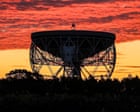
The renowned Jodrell Bank Observatory, a pioneering site for radio astronomy, is currently facing a severe funding crisis. This situation poses a significant threat to its continued operation and could lead to a "brain drain" of top physics talent from the United Kingdom. The observatory's history dates back to December 1945, when physicist Bernard Lovell began studying cosmic rays in the Cheshire countryside using army surplus radar. His work led to the discovery of radio reflections from ionized trails of shooting stars, marking the genesis of radio astronomy at Jodrell Bank. By 1946, engineers had developed a radar system mounted on a searchlight base for studying meteors. A major milestone was the completion of the Lovell telescope in 1957, which was the world's largest radio telescope at the time and uniquely capable of tracking the Soviet Sputnik satellite. The current funding challenges risk jeopardizing this legacy and impacting British science and national economic growth.
The potential closure or diminishment of Jodrell Bank Observatory due to funding issues highlights a recurring challenge in maintaining world-class scientific infrastructure. Governments and institutions must balance immediate budgetary concerns with the long-term strategic importance of scientific research for national competitiveness and innovation. The risk of a "brain drain" underscores the global nature of scientific talent and the need for competitive environments to retain expertise. Investing in foundational scientific facilities like Jodrell Bank can yield unforeseen discoveries and technological advancements, as evidenced by its historical contributions. Future-proofing such assets requires sustainable funding models that acknowledge their role in fostering scientific progress and economic growth over decades, rather than solely focusing on short-term fiscal pressures.
AI-generated to prompt reflection — not editorial opinion, not advice, not a statement of fact. How this works.