Joinville Dance Festival Features 5,000 Dancers in Choreographed Parade
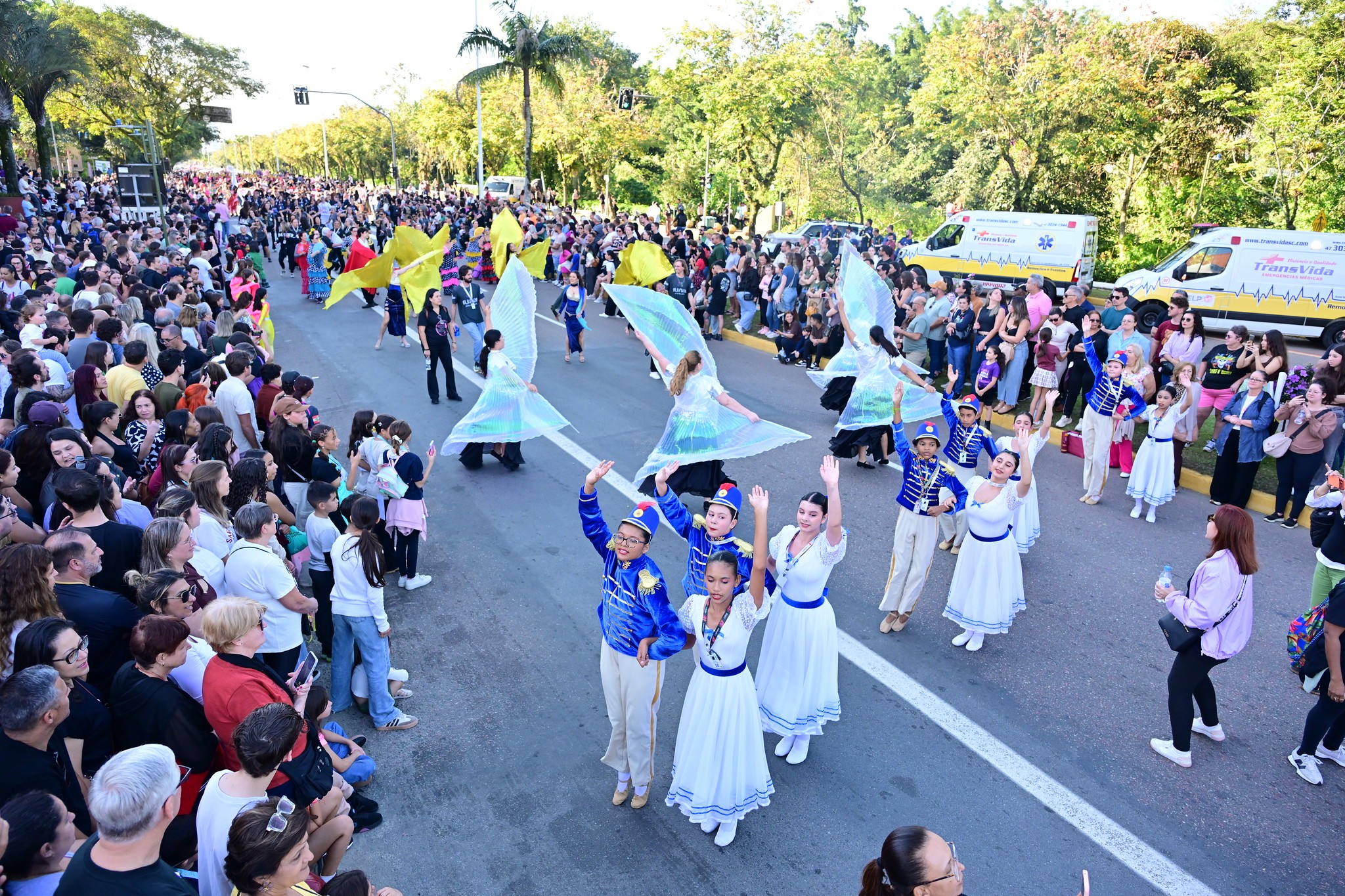
The city of Joinville, Santa Catarina, hosted its annual Dance Festival, culminating in a vibrant street parade called the Dance Parade. This year's event saw approximately 5,000 dancers participating in a spectacle featuring choreographed sections, a unique soundtrack, and large inflatable figures measuring 3.5 meters tall. The parade took place on Avenida Beira-rio, a main thoroughfare, in front of the Centreventos Cau Hansen, a primary venue for the festival. This marked the fourth edition of the Dance Parade, which included 37 groups showcasing various dance styles such as popular dances, classical ballet, urban dances, and jazz. The event's structure included an opening with a 'Dance Train,' performances by winning companies like the Liliana Vieira Dance Company, presentations from the 'Dance in School' program, and inflatable characters representing figures like Carlinhos de Jesus and Nutcracker. Tripods adorned with dance icons further enhanced the visual identity. The parade concluded with 46 groups in a free section, including participants from the Oktoberfest of Blumenau with floats, and the public was invited to join the final procession. The 43rd edition of the Joinville Dance Festival, recognized as the world's largest, began on July 20th and will run until August 1st, featuring performances from nearly all Brazilian states and international participants from countries including Paraguay, Bolivia, Portugal, France, and the United States.
The Dance Parade at the Joinville Dance Festival serves as a powerful public engagement mechanism, transforming a competitive artistic event into a participatory civic celebration. By integrating choreographed sections, diverse dance genres, and community involvement, the parade amplifies the festival's reach beyond traditional performance venues. This approach democratizes cultural access and fosters a sense of collective identity around dance. Looking ahead, such inclusive formats can be leveraged to enhance urban cultural tourism and promote arts education, aligning with societal trends that value experiential engagement and community building in the digital age. The success of this parade highlights the potential for arts festivals to act as catalysts for social cohesion and economic development.
AI-generated to prompt reflection — not editorial opinion, not advice, not a statement of fact. How this works.