Jornal do Campo Teaches Traditional Fire-Roasted Ribs Recipe
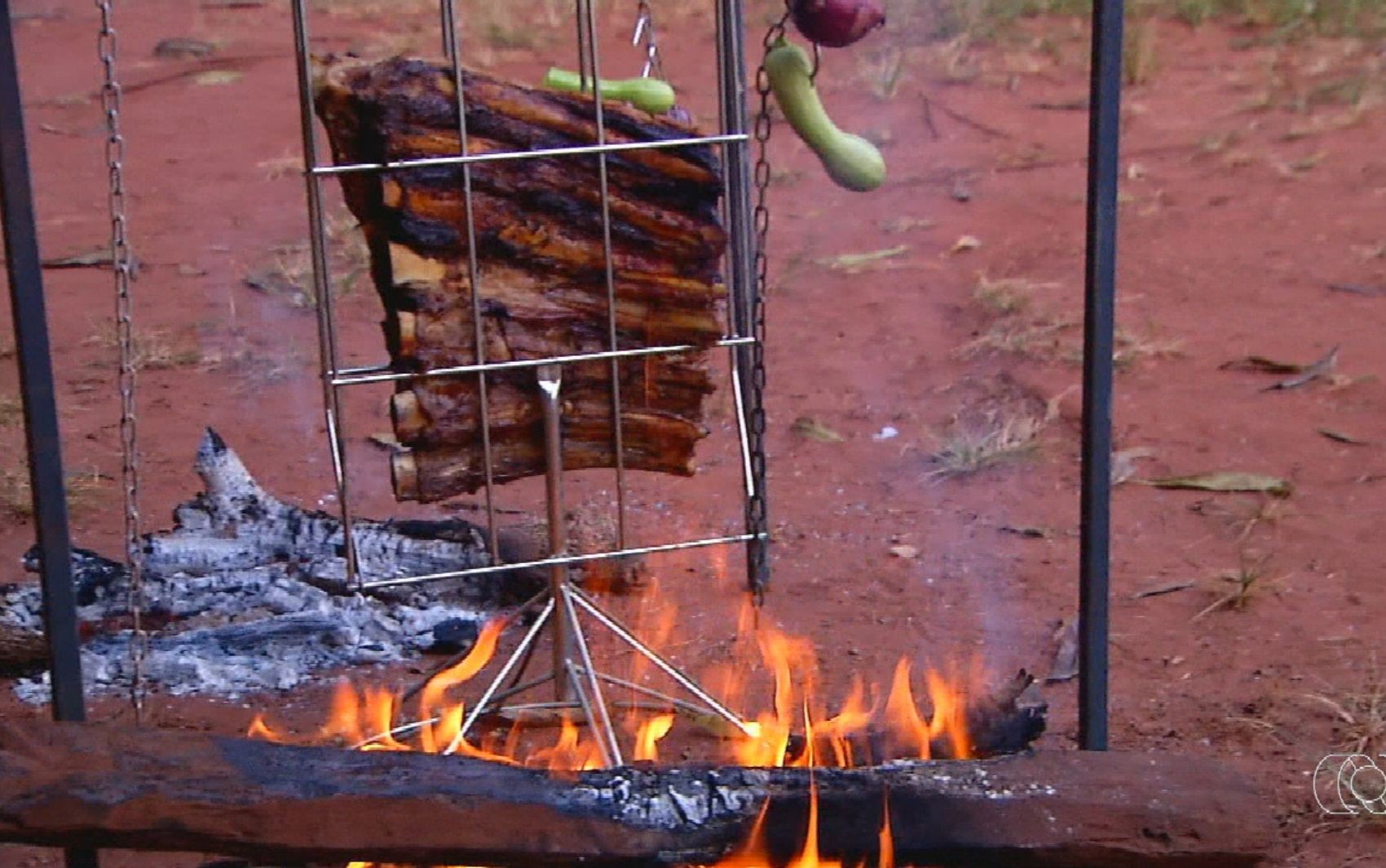
The "Jornal do Campo" (Field Journal) program featured a traditional recipe for fire-roasted beef ribs on Sunday, December 12th. This dish is highlighted not just for its flavor but also as a symbol of rural life, representing outdoor gatherings filled with conversation and shared food. Businessman Eliseu Leão, from Rio Verde in the southwest region of Goiás, emphasized the social aspect of preparing and enjoying the ribs, noting that the lengthy cooking process fosters friendship and good conversation. Leão has hosted such gatherings for over a decade, always featuring a roasted rib dish. The recipe, demonstrated from Rio Verde, uses a 6 kg beef rib cut, though the size can be adjusted. Key ingredients include coarse salt, fried garlic, and 200 ml of cachaça for flavor. Leão prefers the rear cut of the rib for its succulence, acknowledging it takes longer to cook than the front cut. The preparation involves applying cachaça to both sides of the meat, followed by coarse salt and fried garlic. Making cuts in the meat helps the seasoning penetrate and ensures even cooking. The ribs are then cooked over a fire at approximately 90 degrees Celsius for an estimated 5 hours, requiring constant monitoring to maintain the fire's intensity. Leão attributes the popularity of his ribs, considered the most famous in the region by his friends, to the care and "love" put into the preparation.
This segment from "Jornal do Campo" showcases a culinary tradition deeply intertwined with social bonding and rural identity. The emphasis on slow cooking and shared preparation highlights a cultural practice that values process and community over speed and efficiency. In an era increasingly defined by rapid technological advancement and digital interaction, such traditions offer a counterpoint, fostering tangible connections and a sense of place. The recipe itself, while straightforward, underscores the importance of patience and attention to detail, principles that can be applied broadly to complex endeavors. Examining this practice through a ten-year lens, one might consider how such communal food rituals can be sustained and adapted in the face of evolving lifestyles and potential shifts in agricultural communities, ensuring the preservation of both culinary heritage and social cohesion.
AI-generated to prompt reflection — not editorial opinion, not advice, not a statement of fact. How this works.