Journalist Denied Public Service Job Despite Top CNU Exam Score
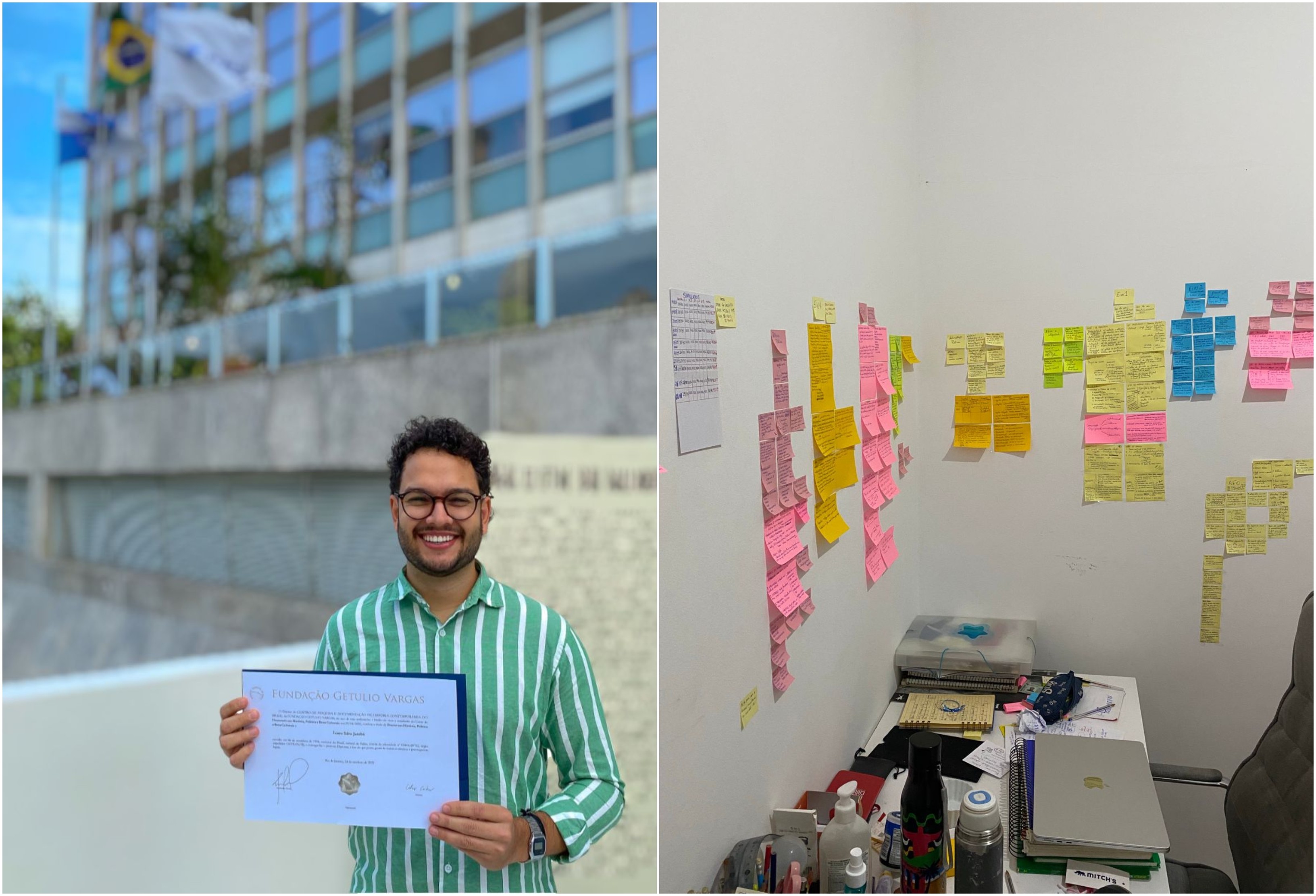
Icaro Silva Jatobá, a 31-year-old journalist, achieved the top score in the unified national public service exam (CNU) for a single position within the Ministry of Health, specifically at the National Cancer Institute (INCA) in Rio de Janeiro. Despite excelling in the written portion and being nominated, Jatobá was denied the role of Analyst in Science and Technology due to his Journalism degree. INCA deemed his academic background incompatible with the position's requirements, which specified a degree in Information Technology, Visual Communication, or "related areas." The edital, however, did not explicitly list which degrees qualified as "related areas."
Jatobá, who holds a master's and doctorate from Fundação Getulio Vargas (FGV) and has ten years of experience in visual and editorial communication, argued that his undergraduate coursework included graphic production, photography, editing, and visual communication. He also consulted FGV and the Ministry of Health, with FGV stating that the hiring body should assess "related areas" during the hiring process. Jatobá sought clarification through official channels and referenced the National Council for Scientific and Technological Development (CNPq) classification, which indicated a proximity between Journalism and Visual Communication. The Ministry of Health, however, stated that the CNPq table is for research classification, not degree equivalency.
Having already completed medical exams and incurred over R$1,000 in expenses, Jatobá's administrative appeal was rejected. He has now taken legal action to contest INCA's decision, citing a lack of objective criteria in the edital regarding "related areas" and potential violations of legal certainty, transparency, and equality principles in public service exams. Legal experts note that such disputes arise when editals use broad terms without clear definitions, potentially disadvantaging candidates who meet the spirit of the requirements.
This case highlights a systemic tension in public service recruitment between the need for specialized technical skills and the interpretation of broad educational requirements. When editals use ambiguous terms like 'related areas,' it creates a potential for subjective interpretation by hiring bodies, even after candidates have demonstrated competence through rigorous examinations. This can lead to legal challenges and undermine public trust in the fairness and predictability of the selection process. Future editals could enhance transparency and legal certainty by providing more explicit definitions of acceptable academic backgrounds or establishing a pre-approval mechanism for degrees considered 'related' to specific roles. The situation also underscores the importance of robust administrative review processes that can objectively assess candidate qualifications before the final stages of hiring, mitigating the risk of costly and time-consuming disputes.
AI-generated to prompt reflection — not editorial opinion, not advice, not a statement of fact. How this works.