Journalist Matiur Rahman's Book Explores Military's Role in Bangladesh Politics
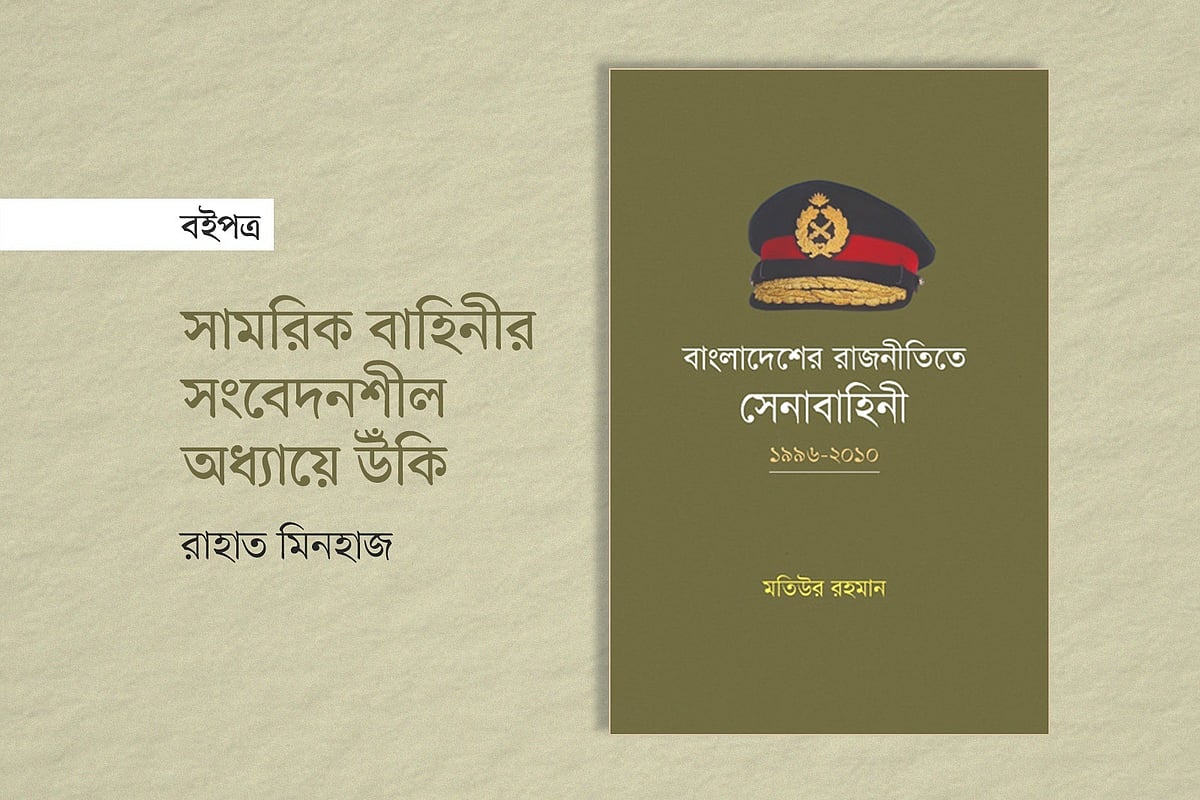
Journalist Matiur Rahman has authored a new book, 'Bangladesh Military in Politics: 1996-2010,' which delves into sensitive and often untold chapters of the Bangladesh military's involvement in the nation's political landscape. The book is a compilation of 18 detailed analytical reports and opinion pieces previously published in ' ভোরের কাগজ' and 'প্রথম আলো' during Rahman's extensive journalism career. It also includes two in-depth interviews offering a gripping account of a coup attempt led by General Nasim in 1996. The work begins by examining the tumultuous events of May 1996, a period when Bangladesh teetered on the brink of military rule, featuring Rahman's significant report, 'I Want to Know the Full Truth About the Military.'
Rahman's book highlights the complex political culture and weak democratic structures in Bangladesh, which have historically led to repeated military interventions, coups, and violent power transitions. He notes that while discussions about the military's role were often taboo due to national security concerns, he consistently focused on these events. The book features his critical analyses of the military's actions during the post-1990 democratic transition and his bold reviews of the military's role during the 'One-Eleven' government in 2007. Rahman also raises crucial questions about the Directorate General of Forces Intelligence (DGFI), suggesting it needs restructuring and greater transparency regarding its operational laws, a point he made in articles published in 1997. The book covers sensitive topics such as presidential assassinations by rogue military elements, leadership appointments, reshuffles, the procurement of MiG-29s, and Operation Clean Heart, providing readers with insights into lesser-known aspects of the military's history. The book spans from 1996 to 2010, though it notably lacks detailed analysis of the 'One-Eleven' political shift, a period readers might expect to see more deeply explored in future editions. The publication, released in February 2026 by Prothoma Prokashon, has 256 pages and is priced at 450 Taka.
This book offers a critical examination of the Bangladesh military's historical influence on the nation's political trajectory, a subject often shrouded in secrecy. By compiling journalistic investigations and interviews, the author provides a valuable resource for understanding the interplay between civil and military powers. The analysis prompts reflection on governance structures that allow for repeated military intervention, questioning the effectiveness of democratic institutions in maintaining civilian supremacy. Future considerations might involve exploring the long-term implications of military involvement on institutional development, accountability mechanisms, and the evolution of democratic norms in Bangladesh, particularly in light of emerging geopolitical and technological shifts that could redefine the role of armed forces globally.
AI-generated to prompt reflection — not editorial opinion, not advice, not a statement of fact. How this works.