Judges Hesitate to Take Risks Under Numerical Case Clearance System
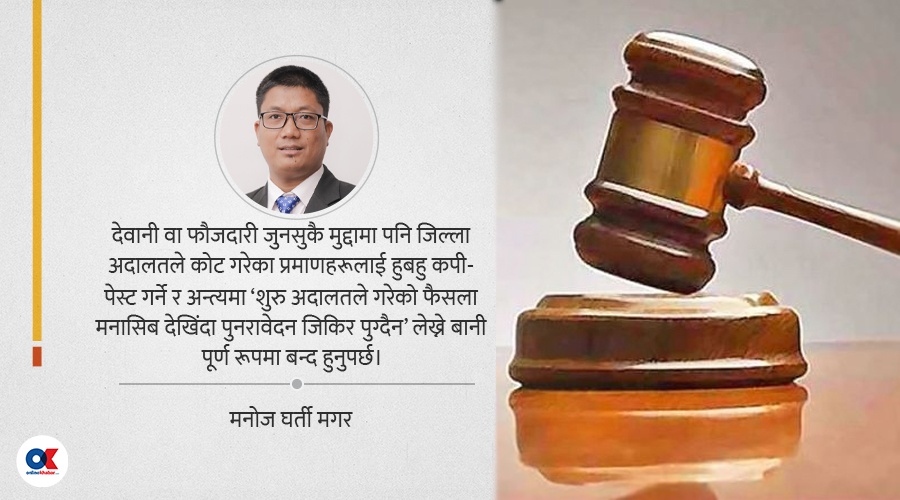
Judges in Nepal are reluctant to take risks in their judicial decisions as long as the Judicial Council prioritizes 'numerical case clearance' in the promotion and evaluation of judges. This system, which focuses on the quantity of cases resolved rather than the quality of justice delivered, creates an environment where judges may fear making bold decisions that could negatively impact their evaluation. Consequently, judges are urged to collectively advocate for reforms to this evaluation system. They should exert pressure through their respective judicial forums to ensure that the assessment of their performance is more balanced and considers factors beyond mere case disposal numbers. This shift is crucial for fostering a judiciary that is willing to uphold justice without undue fear of repercussions based on quantitative metrics.
The current judicial evaluation system in Nepal, which emphasizes numerical case clearance, may inadvertently disincentivize judges from taking necessary legal risks or making nuanced judgments. This focus on quantity over quality could lead to a more conservative judiciary, potentially hindering the evolution of legal precedent and the pursuit of substantive justice. A system that solely relies on case disposal rates might also overlook the complexity of certain cases, the time required for thorough deliberation, and the potential for judicial innovation. Moving forward, a more comprehensive evaluation framework is needed, one that balances efficiency with judicial independence, thoroughness, and the courage to address complex legal challenges. This would foster a more robust and adaptable judicial system, better equipped to serve the public interest in the long term.
AI-generated to prompt reflection — not editorial opinion, not advice, not a statement of fact. How this works.