Juiz de Fora's 77th Corrida da Fogueira Race to Cause Traffic Disruptions
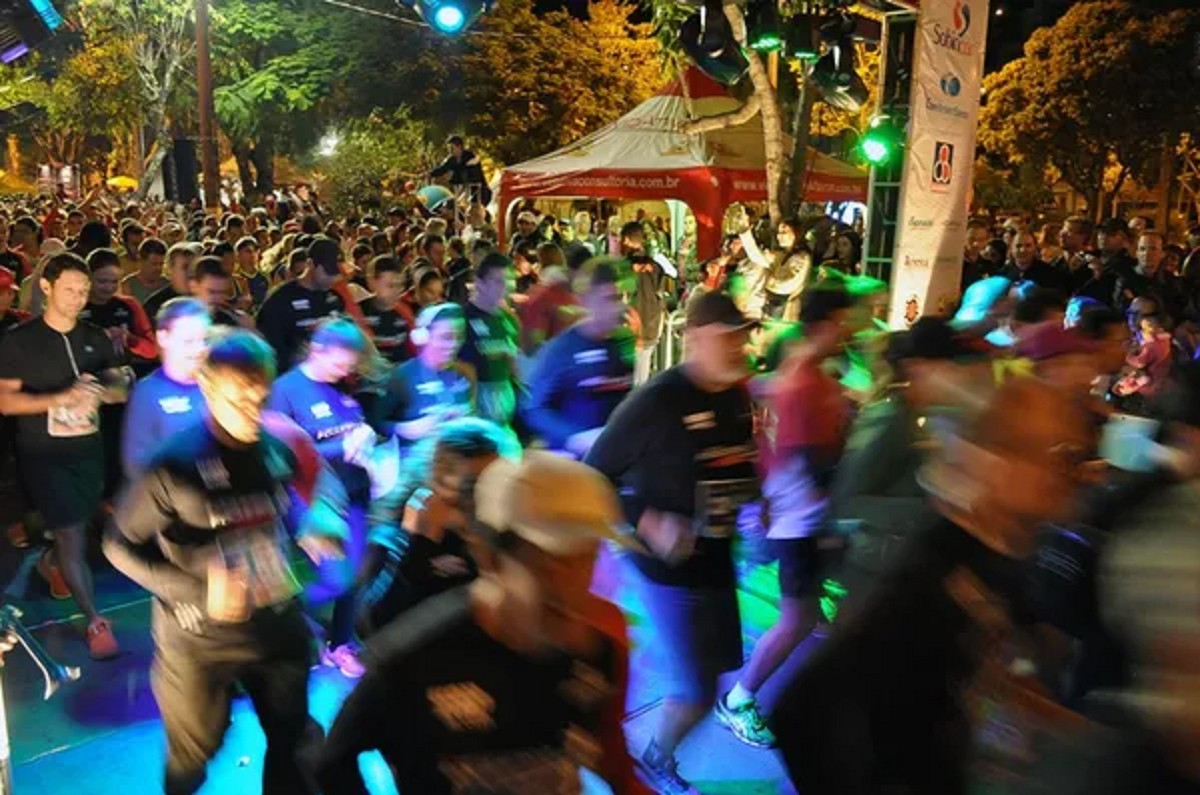
The 77th Corrida da Fogueira race will lead to temporary traffic interdictions in the center of Juiz de Fora this Saturday, November 18th. The event is scheduled to begin at 7 PM, with the start and finish line at Praça do Bom Pastor. The race will impact sections of Avenida Barão do Rio Branco, requiring temporary traffic flow interruptions during the athletes' passage. The route involves participants using the central lanes of Avenida Rio Branco towards the city center until Rua Antônio Lagrota, where they will turn back. They will then return along the same avenue to Praça do Bom Pastor. Traffic agents from the Urban Mobility Secretariat (SMU) will be present to manage and guide drivers. Full traffic release is expected by 9 PM. Preparations for the event begin on Friday, November 17th, with the closure of a lane on Avenida Doutor José Procópio Teixeira, in front of Praça do Bom Pastor, for structure assembly. Approximately 3,500 athletes are registered for the competition, which includes a 7 km run, a 3.5 km walk, and a children's race for those under 15 years old. Bus lines operating on Avenida Rio Branco will continue to function using the side lanes, though some may experience minor detours during setup and the event itself.
This event highlights the recurring tension between public sporting events and urban mobility. While fostering community engagement and promoting healthy lifestyles, large-scale races necessitate significant traffic management, impacting daily commutes and local businesses. The organizers' efforts to provide alternative routes and maintain essential bus services demonstrate a consideration for minimizing disruption. However, the inherent challenge lies in balancing the temporary inconvenience for a larger population against the benefits of the event for participants and spectators. Future urban planning could explore dedicated infrastructure or less disruptive timing for such events to optimize public space utilization and reduce the friction between recreational activities and essential city functions.
AI-generated to prompt reflection — not editorial opinion, not advice, not a statement of fact. How this works.