July Coup Demands Justice and Reform for True Liberation
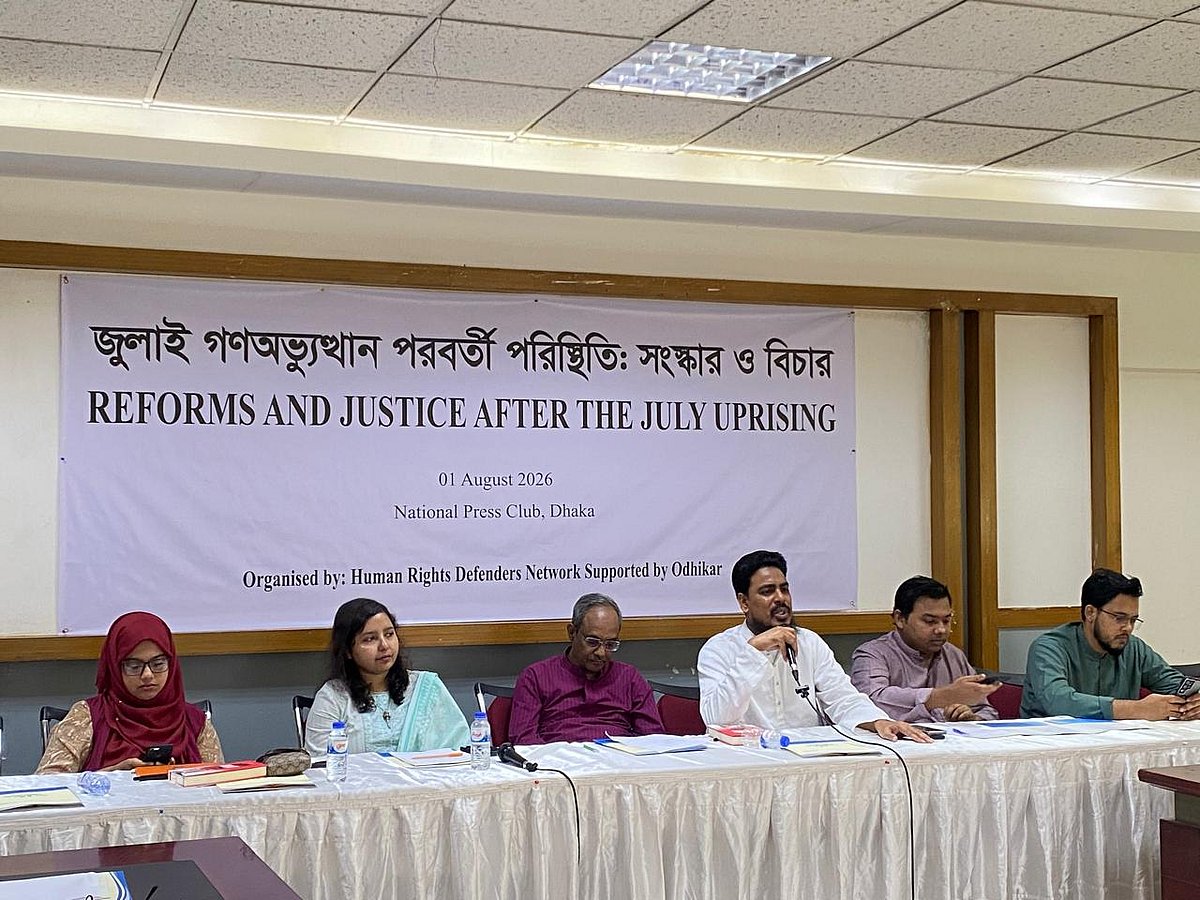
Speakers at a seminar titled 'Post-July Coup Situation: Reform and Justice' emphasized that achieving freedom from a fascist regime and its structures, a core expectation of the July coup, requires both judicial accountability and comprehensive reforms. However, concerns were raised that the government is not demonstrating sufficient initiative towards implementing these reforms.
Akhtar Hossain, Member Secretary of the National Citizen Party (NCP) and a Member of Parliament, noted that the July movement fulfilled two key desires: liberation from 17 years of fascism and oppression, marking it as a significant success. The second desire, a fundamental change in the state structure, has not yet been realized despite public support for a referendum. Hossain criticized the government's rhetoric about adhering to the July charter, suggesting they are seeking excuses to backtrack on reforms, leveraging their two-thirds parliamentary majority to manipulate the constitution. He warned that the BNP would pursue reforms through street protests if necessary.
Hossain also expressed dissatisfaction with the judicial process for cases related to the July movement, noting that trials are proceeding slowly in both ICT and subordinate courts, with outcomes lacking clarity on implementation. He reiterated the expectation that the country would be freed from both a fascist party and its associated structures, which necessitates both justice and reform. Asaduzzaman Fuad, General Secretary of my Bangladesh (AB) Party, urged the government to consider the reality of the situation and fulfill its promises regarding justice and reform. Conversely, Sarwar Tushar, Joint Convener of NCP, questioned the BNP's claim of being the 'father of reform,' suggesting their current actions portray them as its destroyer.
The July coup's stated aims of liberation from fascism highlight a societal demand for systemic change and accountability. The ensuing calls for justice and reform underscore a critical juncture where institutional inertia may conflict with popular aspirations. The government's parliamentary majority presents a leverage point for constitutional maneuvering, potentially creating a governance dynamic where legislative power supersedes broader reformist mandates. This situation prompts consideration of the long-term implications for democratic processes and the rule of law, particularly how the balance between majority rule and minority rights, and the effective implementation of judicial and administrative reforms, will shape the nation's trajectory over the next decade. The tension between stated revolutionary goals and the practical challenges of implementation reveals systemic contradictions that require careful navigation to prevent future instability.
AI-generated to prompt reflection — not editorial opinion, not advice, not a statement of fact. How this works.