July Coup Didn't Crash Market, But Delayed Recovery Amid Uncertainty: Study
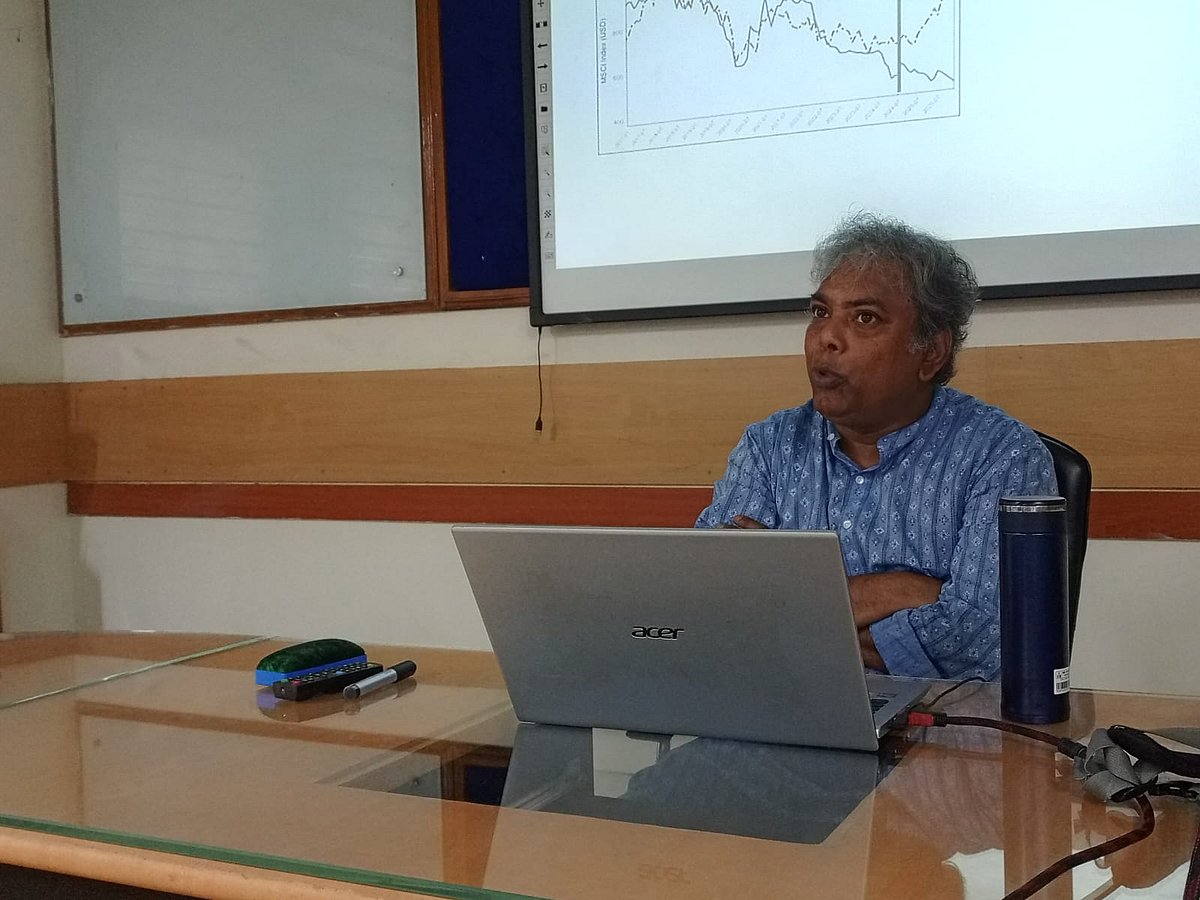
A new study by Aniruddha Mitra, an associate professor at Bard College, suggests that the July 2024 popular uprising in Bangladesh did not cause a significant, immediate crash in the country's stock market. However, the research indicates that the subsequent political and institutional uncertainty has hindered investor confidence and consequently delayed the market's potential recovery. The findings were presented at a seminar organized by the Center on Budget and Policy at the University of Dhaka.
The study, co-authored with Luka Vivas Nikonorov, aimed to assess the impact of the July uprising on Bangladesh's capital market. Mitra noted that while economic impacts of political conflict are widely studied, most research focuses on wars or civil wars, with less attention paid to the economic effects of popular uprisings or youth-led political movements. The research utilized the MSCI global index to analyze the performance of large and mid-cap companies in Bangladesh's stock market. To determine the uprising's true impact, an 'augmented synthetic control' method was employed, creating a hypothetical Bangladesh where the uprising did not occur and comparing it to the actual market performance.
Key economic indicators considered in the model included export earnings, the dollar-to-taka exchange rate, the Consumer Price Index (CPI), and the amount of loans from the International Monetary Fund (IMF). The study found that weaknesses in Bangladesh's financial sector and stock market predated the July uprising, with the post-COVID economic recovery faltering in late 2021 and the Russia-Ukraine war exacerbating issues in 2022. These pre-existing economic pressures, such as rising energy prices, increased import costs, and reduced remittances, had already weakened the financial sector. While the uprising did not intensify the existing downward trend, the post-coup policy and institutional uncertainty slowed down the economy's natural adjustment process, delaying a potential recovery. The analysis suggests that without the uprising, the market might have begun a gradual recovery after 2024. The study period covered August 2024 to July 2025, though the stock market index has shown some improvement in recent months.
This research offers a nuanced perspective on the economic consequences of political upheaval, distinguishing between immediate market shocks and longer-term recovery impediments. By employing a counterfactual analysis, the study attempts to isolate the specific impact of the July uprising from pre-existing economic vulnerabilities exacerbated by global events like the Russia-Ukraine war. The findings suggest that institutional and policy uncertainty, rather than the uprising itself, has been the primary drag on market confidence and recovery. This highlights the critical role of stable governance and predictable policy environments in fostering investor sentiment, especially in emerging markets. The research also raises important questions about whether youth-led movements require distinct analytical frameworks within political economy and why Bangladesh may have been disproportionately affected compared to similar export-dependent nations, warranting further investigation into structural economic factors and resilience.
AI-generated to prompt reflection — not editorial opinion, not advice, not a statement of fact. How this works.
