July Uprising: Fact, Propaganda, and Disinformation
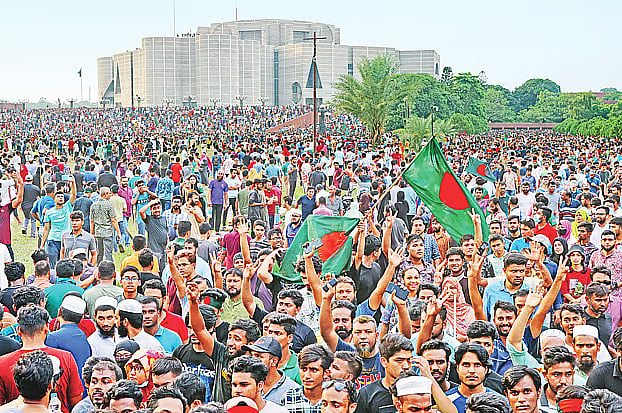
The July Uprising in Bangladesh has been recognized in history as a significant event, comparable to other major movements and struggles in the nation's past. Following the Liberation War, this uprising stands out as the largest mass movement in Bangladesh's history. It has secured its place in historical records as a testament to the nation's ongoing fight for its ideals. The narrative surrounding the July Uprising, like many historical movements, is subject to interpretations that can include factual accounts, promotional narratives, and disinformation. Understanding these different layers is crucial for a comprehensive historical perspective. The event's significance is underscored by its comparison to the pivotal Liberation War, highlighting its scale and impact on the country's socio-political landscape. As a mass movement, it represents a collective expression of the people's will and aspirations. The historical recognition of the July Uprising signifies its enduring importance in the collective memory of Bangladesh. The interplay of reality, propaganda, and disinformation shapes how such events are remembered and understood across generations. Therefore, a critical examination of the historical narrative is essential for discerning objective truths.
The July Uprising is framed as a significant historical event in Bangladesh, positioned as the largest mass movement since the Liberation War. The narrative acknowledges the existence of factual accounts alongside propaganda and disinformation, suggesting a complex historical record. Future analysis should focus on dissecting the information ecosystem surrounding the event to understand how differing narratives were constructed and disseminated. Examining the incentives for promoting specific versions of the uprising, whether for political or social ends, will be key. Considering the long-term impact of these narratives on national identity and historical consciousness in the digital age is also crucial, as digital platforms can amplify both factual reporting and misinformation, shaping perceptions for decades to come.
AI-generated to prompt reflection — not editorial opinion, not advice, not a statement of fact. How this works.