July Uprising Participant Loses Leg, Receives Reduced Allowance
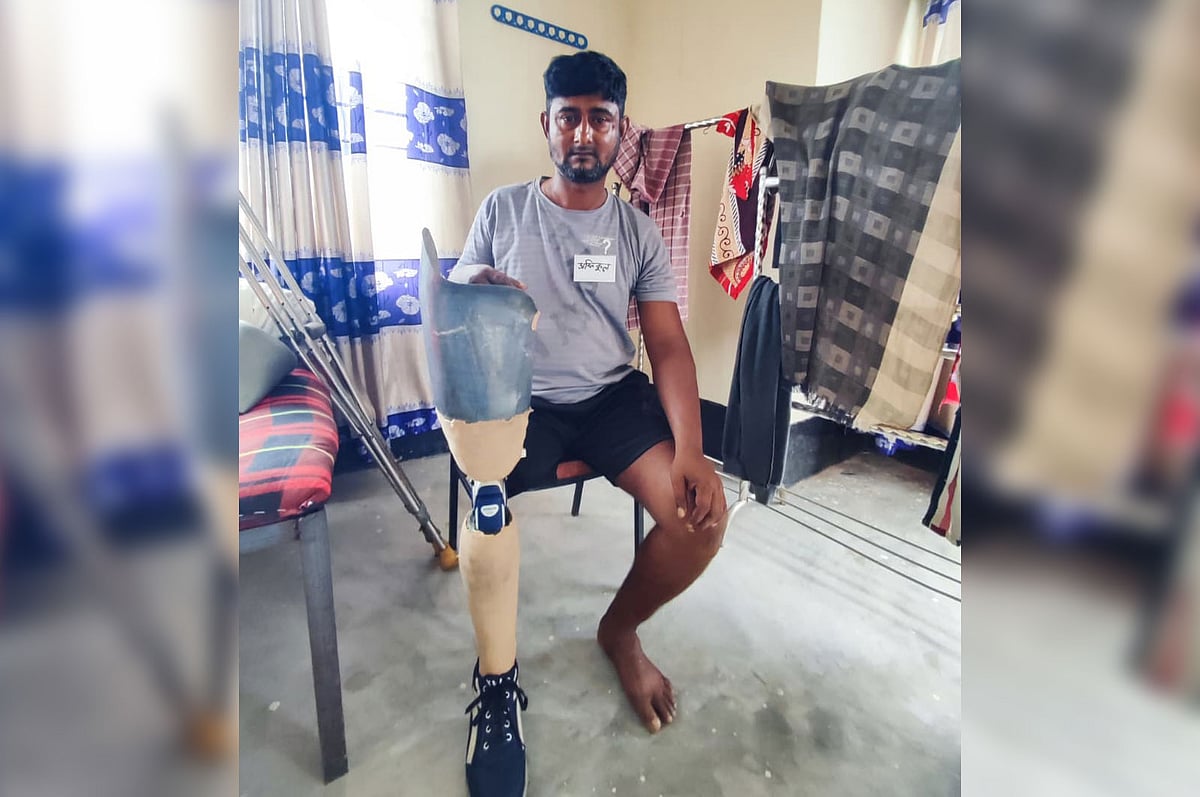
Md. Shofiqul Islam, a 43-year-old pickup driver from Bogura, was shot and critically injured on July 16, 2024, during the July General Uprising in Gazipur. He was returning from delivering poultry to Dhaka when he stopped for lunch and was hit by gunfire. Lying on the road for over an hour with a broken right arm and a leg wound, he was eventually taken to a hospital by an auto-rickshaw driver. His injuries were so severe that his right leg had to be amputated above the knee on February 8, 2023, after persistent infections. Despite being listed as an injured 'July Warrior' three months before his leg was amputated, Shofiqul was classified as 'Class B' (serious injury) instead of 'Class A' (very severe injury). This classification means he receives a monthly allowance of 15,000 Taka, 5,000 Taka less than the 20,000 Taka allocated for 'Class A' recipients. He claims to have received no financial assistance from the July Shahid Smriti Foundation, despite visiting them multiple times and calling their hotline. Shofiqul, who lost his parents earlier and is the fourth of eight siblings, supports his wife, Reshma Begum, and two daughters, aged 21 and 14, who are pursuing higher education. His income has stopped since losing his leg, and he struggles to manage household expenses. The July General Uprising, led by the interim government, has officially listed 865 'July Martyrs' and 15,903 injured 'July Warriors'. The July Shahid Smriti Foundation CEO stated that insufficient funds have prevented full support for all recipients, with staff salaries unpaid for five months and a significant funding shortfall.
The case of Md. Shofiqul Islam highlights potential systemic challenges in the disbursement of aid and classification of injuries following significant civil unrest. While the interim government has established a framework for supporting 'July Warriors,' discrepancies in classification and alleged lack of financial support from the July Shahid Smriti Foundation raise questions about the efficiency and equity of the aid distribution process. The foundation's stated funding shortfall, impacting both recipients and staff, suggests a need for greater financial transparency and sustainable funding models to ensure promised support reaches those most in need. Future policy considerations might include independent review mechanisms for injury classification and more robust oversight of aid foundations to prevent such disparities and ensure the long-term well-being of injured citizens.
AI-generated to prompt reflection — not editorial opinion, not advice, not a statement of fact. How this works.