July Uprising's Lasting Success Hinges on Fundamental State Restructuring
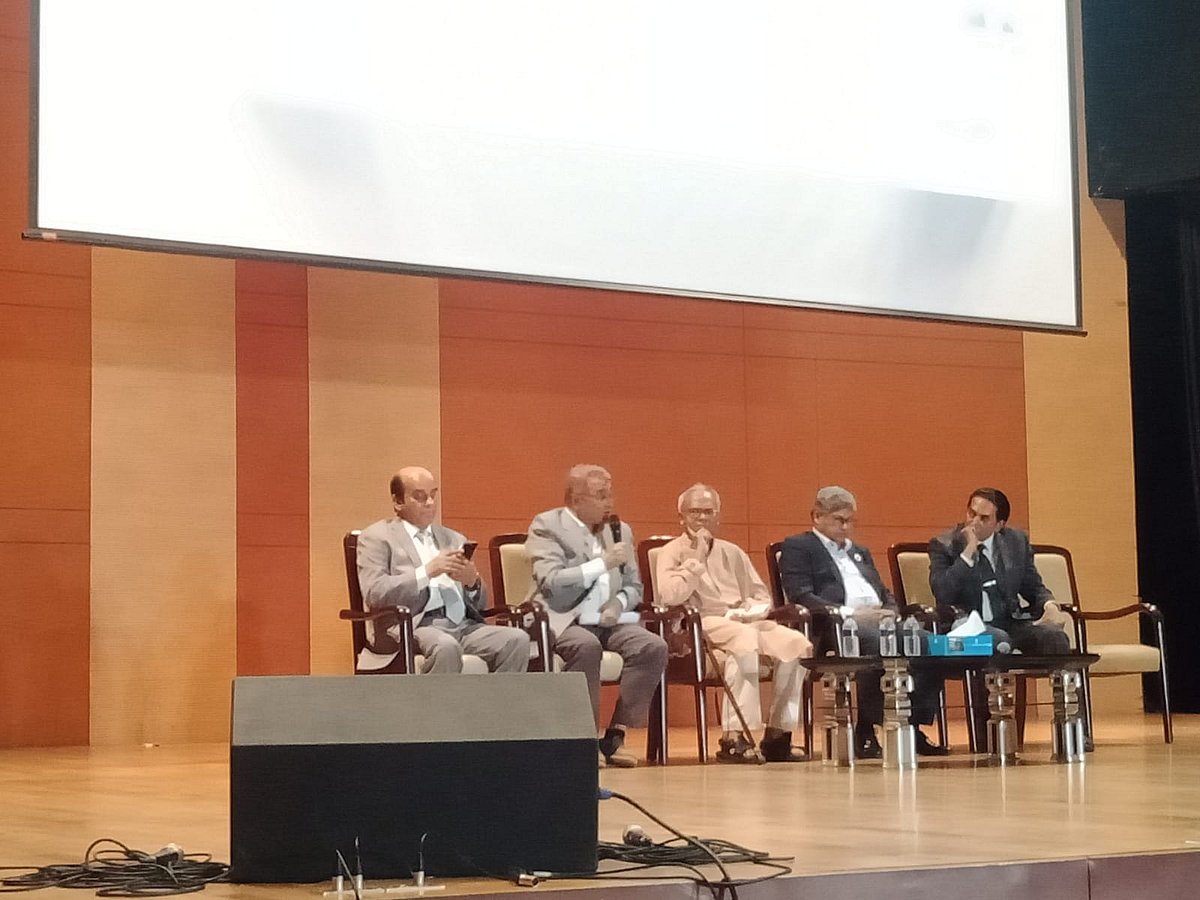
The July mass uprising, which ended autocratic rule, was more than a protest against quota reforms; it represented a historic youth-led resistance against deep-seated crises in the state, society, and politics. Speakers at a joint event hosted by North South University (NSU) and the July Martyrs' Memorial Foundation emphasized that sustaining the movement's success requires fundamental transformation of the state structure, alongside ensuring education, employment, and social justice. The event, titled 'July Uprising 2024 Commemoration,' included a moment of silence for martyrs, prayers, a photo exhibition, and thematic music.
Prime Minister's Political Advisor and BNP Senior Joint Secretary Ruhul Kabir Rizvi stated that safeguarding democracy and civil rights necessitates a change in political culture and public mindset, not just legal amendments. He noted that past constitutional safeguards for democracy were often dismantled by political parties in power, highlighting the need for tolerance and mutual respect among state operators. Rizvi also asserted that a nation's true strength lies in its history, memory, and values, which form the basis of national identity and future development, enabling learning from past mistakes.
Professor Salimullah Khan of NSU's Liberation War Research Center argued that democracy's core is the inseparable union of freedom and equality, which is absent without equal rights and opportunities. He identified education and civil rights as the most critical areas for social reform, lamenting the failure to provide quality primary education for all after decades of independence. Khan also pointed to 'fascism' as a crucial but under-discussed concept, stressing the need to dismantle the political, social, and cultural structures that enable and sustain it, warning that movements limited to mere reforms often fail. The question remains whether the July uprising will lead to structural transformation or stall at superficial changes.
Other speakers, including Samanta Sharmin of the National Citizens Committee, highlighted the role of private university students in shaping their political history and the significant, yet under-acknowledged, contribution of women to the movement. Benazir Ahmed, a member of NSU's Board of Trustees, saw the uprising as an opportunity to re-establish democracy, contingent on government and opposition collaboration for a successful and equitable nation. The event also featured experiences shared by faculty and students involved in the uprising.
The July Uprising's legacy is framed by a call for fundamental systemic reform beyond superficial changes, addressing deep-rooted issues in governance, education, and social equity. The discussion highlights a tension between incremental reforms and the need for structural transformation to prevent the recurrence of autocratic tendencies or 'fascist' underpinnings within the state apparatus. This points to a broader challenge in post-conflict or transitional societies: how to institutionalize democratic norms and equitable resource distribution effectively. The emphasis on historical memory and values suggests a recognition that national identity and future progress are contingent on confronting past failures and building trust across political divides. The future trajectory will likely depend on the capacity of both state institutions and civil society to engage in sustained dialogue and implement reforms that address the underlying causes of political instability and inequality, rather than merely managing symptoms.
AI-generated to prompt reflection — not editorial opinion, not advice, not a statement of fact. How this works.