Jupiter's magnetic field may explain why it has many large moons while Saturn has only Titan
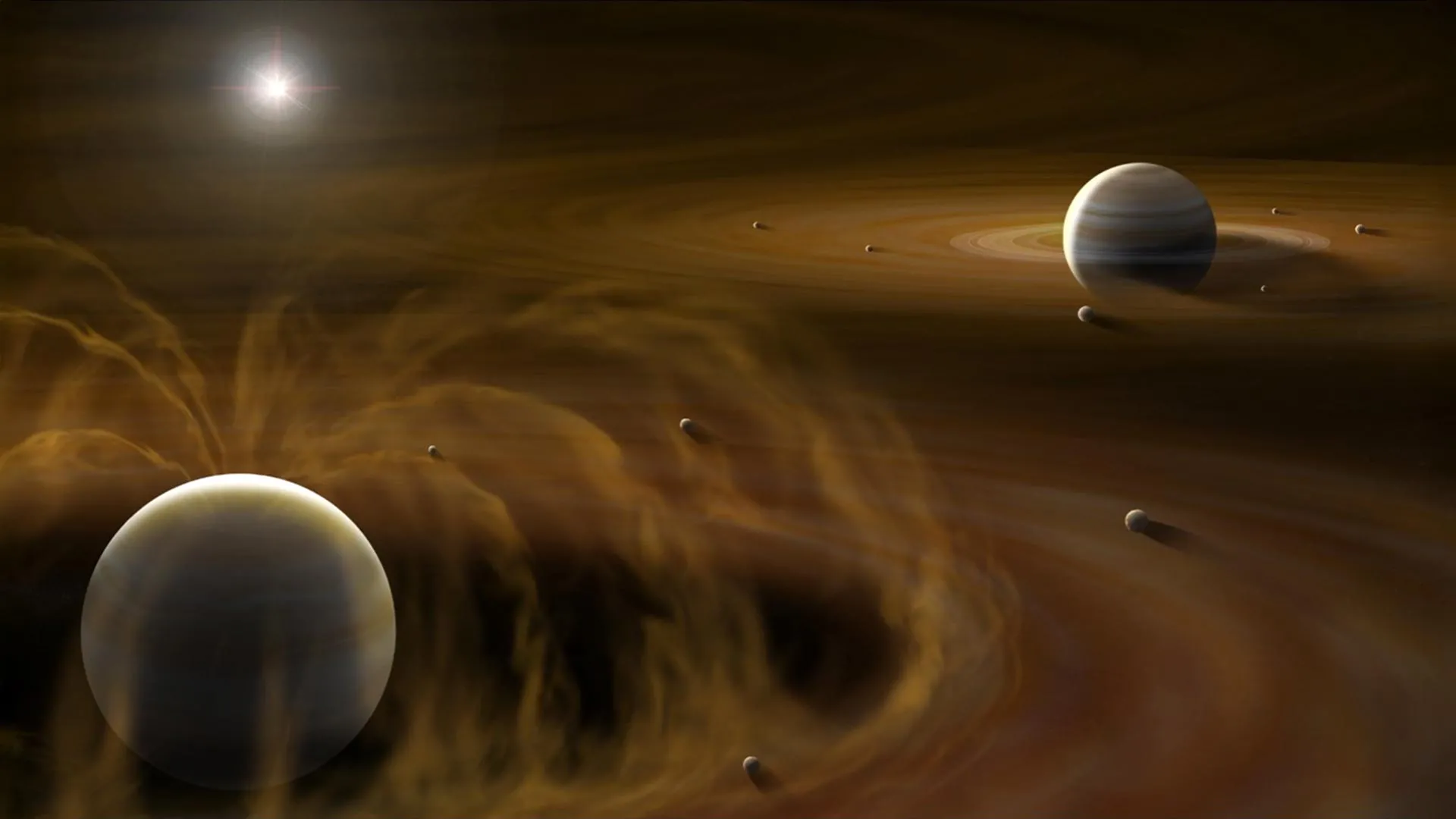
Scientists propose that Jupiter's powerful magnetic field during its early formation may have created a protective region, allowing several large moons to coalesce and survive. This magnetic shield might have shielded these nascent moons from harmful radiation and gravitational disruptions. In contrast, Saturn, lacking a similarly robust magnetic field in its early stages, may not have offered the same protective environment. This difference in early conditions could explain why Jupiter boasts multiple massive moons, while Saturn's largest moon, Titan, appears to be an outlier among its smaller satellites. This hypothesis suggests that planetary magnetic fields play a crucial role in the formation and survival of large moons in planetary systems. Further research into the magnetic field strengths and moon formation histories of gas giants could validate this theory.
The hypothesis posits that the presence and strength of a young planet's magnetic field significantly influence the number and size of its moons. This perspective highlights the interplay between a planet's intrinsic properties and the accretion processes in its circumplanetary disk. It suggests that magnetic fields can act as a crucial environmental factor, potentially mitigating disruptive forces and fostering the stable growth of large celestial bodies. Examining this through a long-term lens, understanding such planetary formation dynamics is key to predicting habitability and the diversity of exoplanetary systems, especially as AI-driven astronomical surveys discover an increasing number of planetary bodies.
AI-generated to prompt reflection — not editorial opinion, not advice, not a statement of fact. How this works.