Jupiter-Sized Planet Survives Star's Death
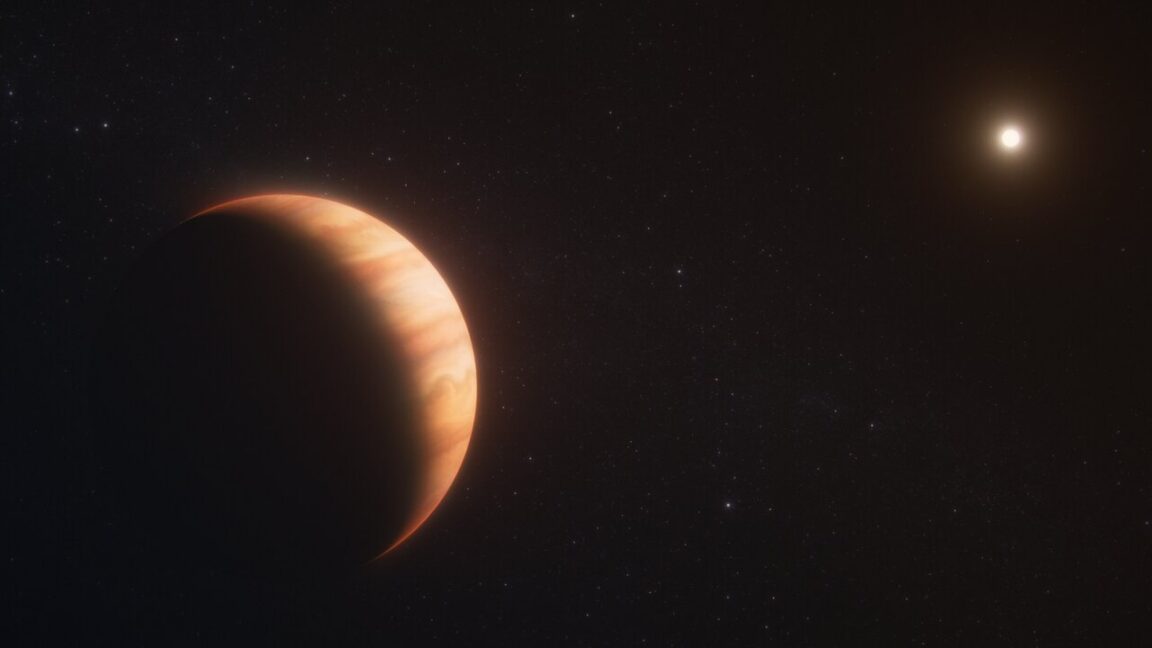
Astronomers have discovered a planet roughly the size of Jupiter that has survived the death of its host star. The star, which has evolved into a red giant, is expected to engulf any inner planets. However, this particular Jupiter-sized planet managed to avoid this fate, though the exact mechanism for its survival remains unknown. Scientists are still investigating how the planet escaped being consumed by its star's expanding outer layers. This discovery presents a puzzle for current models of stellar evolution and planetary dynamics. Further research is needed to understand the conditions that allowed this planet to persist. The finding could offer new insights into the long-term fate of planetary systems.
This discovery challenges conventional astrophysical models of stellar evolution and planetary system survival. The survival of a gas giant like Jupiter in close proximity to a star's red giant phase suggests that current theoretical frameworks may not fully account for all possible outcomes. Future research will likely focus on refining models to incorporate factors such as orbital dynamics, planetary mass, and the specific evolutionary path of the star. Understanding these survival mechanisms could provide valuable data for predicting the long-term habitability and stability of exoplanetary systems, especially in the context of our own sun's eventual red giant phase.
AI-generated to prompt reflection — not editorial opinion, not advice, not a statement of fact. How this works.