JWST Detects Extreme Heat and Rapid Atmospheric Changes on 'Roasted Planet'
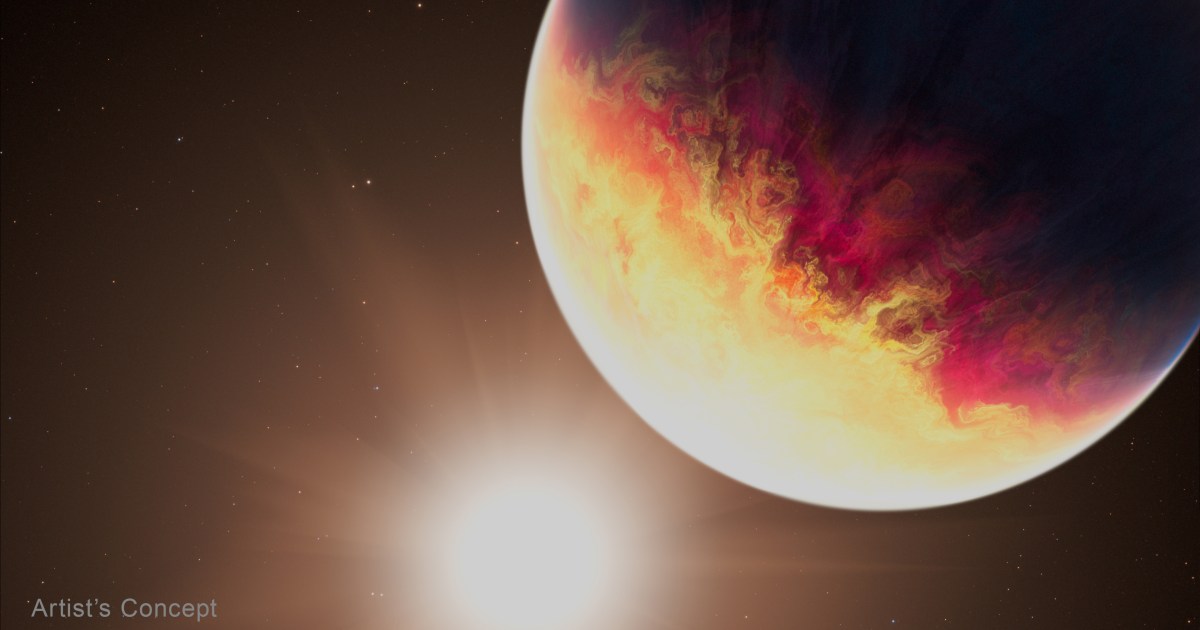
New observations from the James Webb Space Telescope (JWST) have provided unprecedented insights into the exoplanet HD 80606 b, often referred to as the "Roasted Planet." These findings indicate that the planet is experiencing even more extreme temperatures due to its host star than scientists had previously estimated. Furthermore, the JWST data suggests that the planet's atmosphere is reacting to this intense heat at a pace that outstrips current predictive models. HD 80606 b, first discovered in 2001, is known for its highly eccentric orbit, which brings it unusually close to its star. This proximity subjects the planet to dramatic temperature swings and intense stellar radiation. The JWST's advanced capabilities allowed astronomers to capture detailed atmospheric data, revealing the rapid and significant impact of the star's energy. The discrepancy between observed atmospheric responses and theoretical predictions highlights potential gaps in our understanding of exoplanet atmospheric dynamics under extreme conditions. Further study of HD 80606 b could refine models of planetary atmospheres and their evolution, particularly for planets orbiting close to their stars. This research contributes to the broader scientific effort to understand planetary diversity across the galaxy.
The JWST's observations of HD 80606 b underscore the challenges in modeling exoplanetary atmospheres, particularly for planets with highly eccentric orbits subjected to intense stellar radiation. The observed rapid atmospheric response, exceeding theoretical predictions, suggests that current models may not fully account for the complex feedback mechanisms and energy transfer processes occurring under such extreme conditions. This finding prompts a re-evaluation of atmospheric dynamics and heat distribution in exoplanets, potentially influencing future research priorities in exoplanet characterization. Understanding these discrepancies is crucial for refining our search for habitable worlds and for comprehending the vast diversity of planetary systems within our galaxy, especially as AI-driven analysis becomes more prevalent in astronomical data processing.
AI-generated to prompt reflection — not editorial opinion, not advice, not a statement of fact. How this works.