JWST Observes Distant Supernova from Early Universe
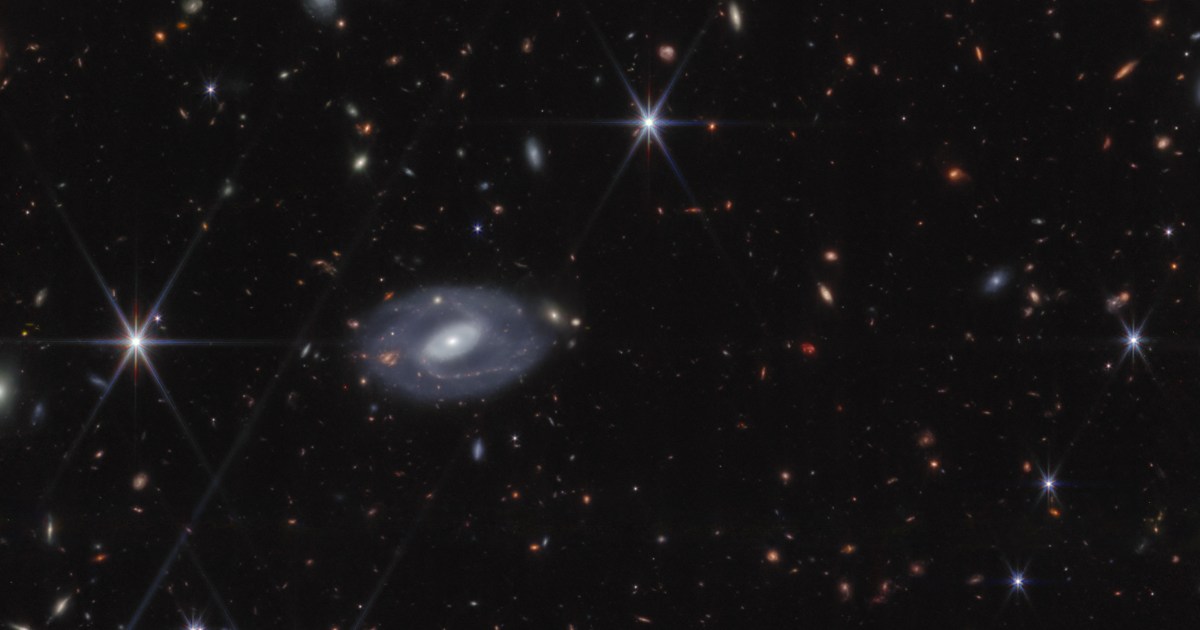
The James Webb Space Telescope (JWST) has captured observations of a supernova explosion that occurred approximately 730 million years after the Big Bang. This event, a massive star's collapse, generated an exceptionally bright blast visible across the cosmos. Upon detecting the light from this distant supernova, telescopes globally and in orbit were directed to study the phenomenon. The JWST's advanced capabilities allow for unprecedented insights into cosmic events from the universe's infancy. Studying such early supernovae helps astronomers understand the conditions and processes that shaped the early universe. This particular observation provides valuable data on stellar evolution and the chemical composition of the universe at a very early stage. The findings contribute to our broader understanding of galaxy formation and the evolution of cosmic structures.
The JWST's observation of a supernova from the early universe offers a unique window into cosmic evolution. By analyzing light from such an early epoch, scientists can refine models of stellar lifecycles and the distribution of elements shortly after the Big Bang. This data is crucial for understanding the conditions that enabled the formation of the first galaxies and stars. Such observations highlight the power of advanced astronomical instruments to push the boundaries of our knowledge, providing empirical evidence to test theoretical frameworks about the universe's formative years and its subsequent development.
AI-generated to prompt reflection — not editorial opinion, not advice, not a statement of fact. How this works.