JWST Observes Two Stars for Signs of Dyson Spheres
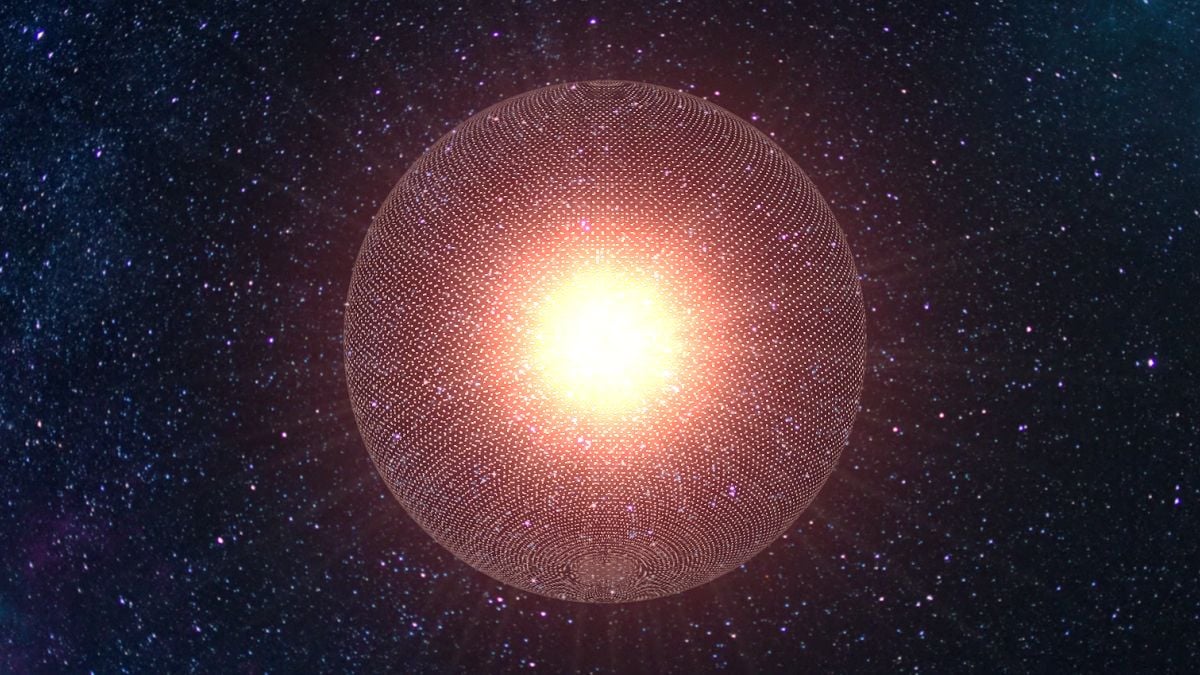
The James Webb Space Telescope (JWST) has recently observed two stars, designated HD 234774 and HD 172167, which were previously identified as potential candidates for harboring Dyson spheres. A Dyson sphere is a theoretical megastructure that would encompass a star to capture its energy output. The initial interest in these stars stemmed from observations made by the Spitzer Space Telescope, which detected unusual infrared emissions suggesting the presence of large amounts of dust. This dust could potentially be indicative of a Dyson sphere construction or remnants. However, the more sensitive and detailed data from JWST has provided a clearer picture. The recent observations indicate that the infrared excess observed around HD 234774 is likely due to a massive ring of dust, possibly originating from a planetary collision or a similar celestial event. Similarly, the data for HD 172167 suggests that its infrared signature is better explained by the presence of a dusty debris disk, rather than a megastructure. While these findings do not confirm the existence of Dyson spheres around these particular stars, the JWST's capabilities have allowed for a more precise characterization of their environments. This research highlights the ongoing scientific effort to search for technosignatures, which are indicators of advanced extraterrestrial technology.
The JWST's examination of stars HD 234774 and HD 172167 represents a significant advancement in the scientific search for extraterrestrial intelligence (SETI) by enabling more precise characterization of potential technosignatures. While the initial hypothesis of Dyson spheres has not been confirmed, the telescope's advanced infrared sensitivity has allowed researchers to attribute the observed anomalies to more conventional astrophysical phenomena, such as dust rings and debris disks. This outcome underscores the importance of rigorous scientific methodology and technological capability in distinguishing between natural cosmic processes and potential artificial constructs. The ability to differentiate between these possibilities is crucial for avoiding premature conclusions and for guiding future SETI efforts toward more promising targets or refined search strategies. The ongoing refinement of observational tools and analytical techniques will continue to shape our understanding of the universe's potential for harboring advanced civilizations.
AI-generated to prompt reflection — not editorial opinion, not advice, not a statement of fact. How this works.