JWST Reveals Neighboring Galaxy Jet Halting Star Formation in Early Universe
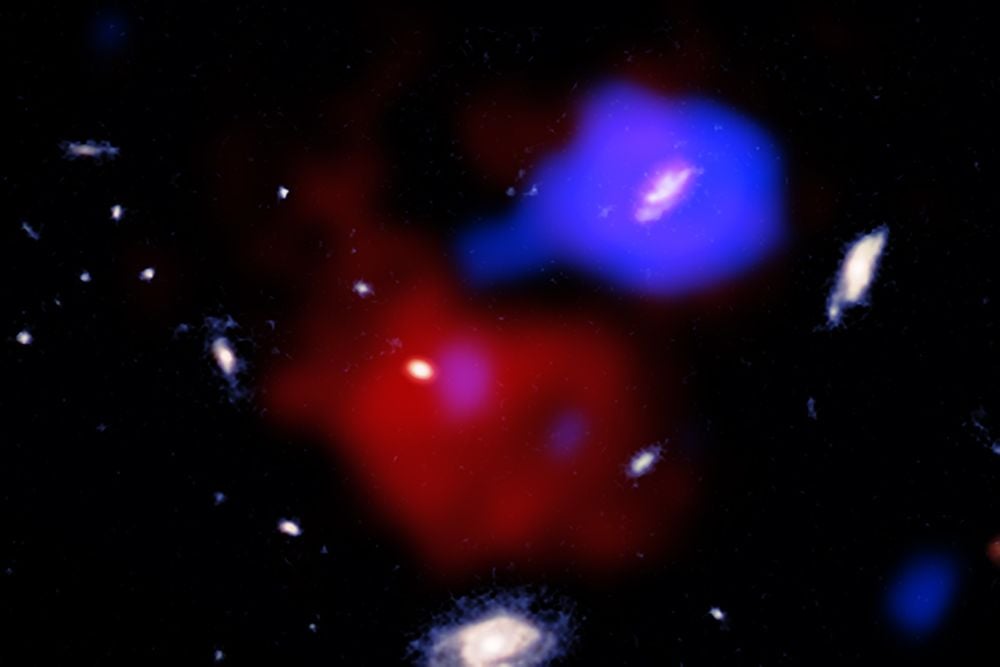
The James Webb Space Telescope (JWST) has observed galaxies in the early Universe that are not forming stars, a phenomenon that was not expected to occur so soon after the Big Bang. Typically, galaxies draw in cold gas from the intergalactic medium, which fuels the creation of new stars. However, JWST data has identified galaxies that have ceased this process prematurely. In a specific case involving a galaxy known as the Red Potato Galaxy, evidence suggests that an active galactic nucleus (AGN) jet emanating from a nearby galaxy is responsible for quenching star formation. This discovery challenges existing models of galaxy evolution, which predicted that such quiescent galaxies would only emerge much later in cosmic history.
The JWST's observation of early-universe galaxies halting star formation, potentially due to AGN jets from neighbors, highlights a critical feedback mechanism in galactic evolution. This suggests that the interplay between galaxies, particularly the energetic outflows from active nuclei, can significantly accelerate the transition to quiescence, deviating from models that emphasize gradual gas depletion. Understanding these rapid quenching processes is crucial for refining cosmological simulations and predicting the distribution and properties of galaxies across cosmic time. The findings prompt further investigation into the prevalence of such interactions and their impact on the overall structure and evolution of the early cosmic web.
AI-generated to prompt reflection — not editorial opinion, not advice, not a statement of fact. How this works.