JWST's 'Little Red Dots' May Be Ancient Star Clusters with Central Supermassive Stars
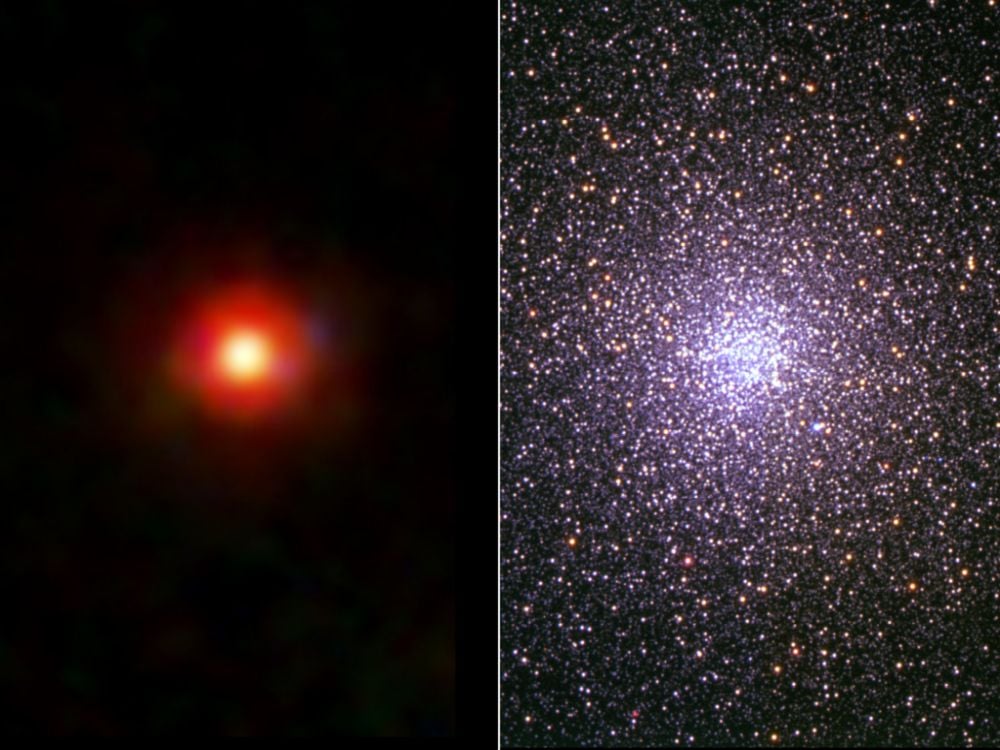
Astronomers are investigating the nature of mysterious 'Little Red Dots' detected by the James Webb Space Telescope (JWST). These enigmatic objects have presented a puzzle, with several potential explanations proposed by researchers. New scientific research suggests that these Little Red Dots could be ancient globular clusters. A key characteristic of this hypothesis is the presence of a supermassive star at the very center of each cluster. Globular clusters are densely packed collections of stars, typically very old. The idea that such clusters might contain a single, exceptionally large star at their core is a novel concept being explored. Further observations and analysis are needed to confirm this theory and understand the formation and evolution of these unusual cosmic structures. The JWST's advanced capabilities are crucial in uncovering and studying such distant and faint phenomena.
The identification of 'Little Red Dots' by the JWST highlights the telescope's power to reveal previously unseen cosmic phenomena. The hypothesis that these are ancient globular clusters dominated by supermassive stars presents an intriguing possibility for understanding stellar evolution and cluster formation in the early universe. This finding prompts further inquiry into the conditions that might lead to the formation of such massive central stars within dense stellar environments. Future research will likely focus on spectroscopic analysis to confirm the composition and mass of these central objects and to refine models of early stellar populations. Understanding these structures could offer insights into galactic evolution and the distribution of mass in the nascent cosmos.
AI-generated to prompt reflection — not editorial opinion, not advice, not a statement of fact. How this works.