JWST Uncovers Hidden Mergers Driving Early Universe Galaxy Quenching
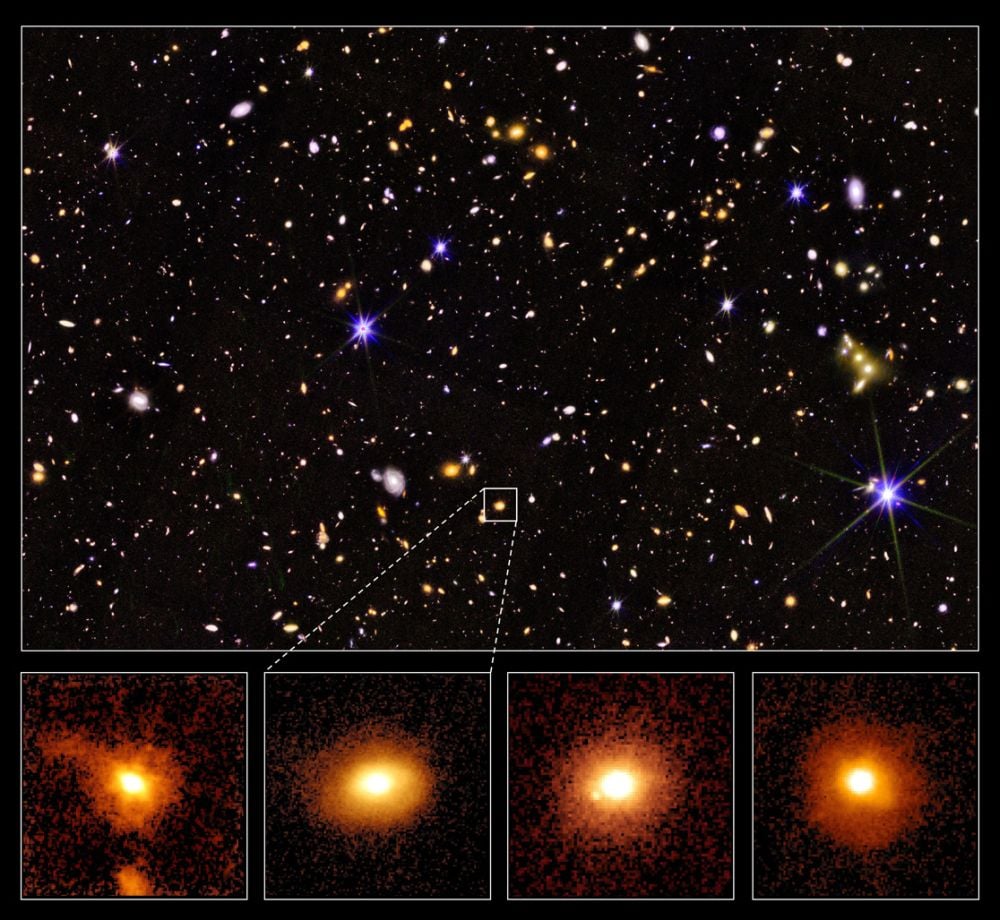
The James Webb Space Telescope (JWST) has provided new insights into the early Universe, revealing that massive galaxies stopped forming stars much sooner than previously believed. These 'quenched' galaxies had ceased their star formation hundreds of millions of years earlier than anticipated. New research analyzing the morphology of these galaxies suggests that previously hidden mergers are the primary reason for this rapid quenching. The JWST's capability to observe highly red-shifted light from these distant galaxies has been crucial in uncovering these surprising findings. By studying the shapes and structures of these early galaxies, astronomers can infer the processes that led to their rapid evolution and cessation of star birth. This discovery challenges existing models of galaxy formation and evolution in the nascent Universe, indicating a more dynamic and rapid process than previously understood.
The JWST's observations challenge established timelines for galaxy evolution, suggesting that complex merger events played a more significant and rapid role in shaping early cosmic structures than current models account for. This implies that the mechanisms driving galaxy quenching may operate more efficiently under the conditions of the early Universe. Understanding these accelerated processes could refine cosmological simulations and our comprehension of the universe's structural development over the next decade. Future research will likely focus on identifying the specific triggers and dynamics of these early mergers and their impact on subsequent galactic evolution.
AI-generated to prompt reflection — not editorial opinion, not advice, not a statement of fact. How this works.