K2 Airways Flight 1732: Navigational Failure and Spatial Disorientation Suspected in Boeing 737-400 Crash
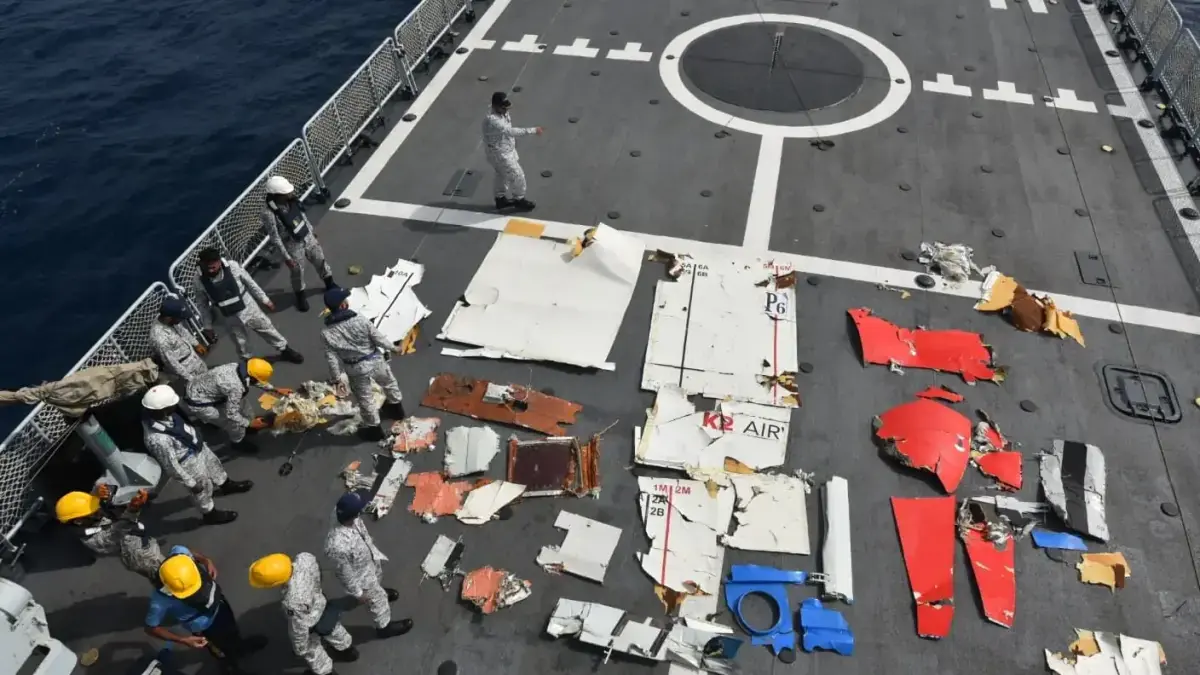
K2 Airways Flight 1732, a Boeing 737-400 (AP-BOI), experienced a catastrophic loss of control on July 7th, shortly after reporting navigation system failures. Operating a ferry flight from Sharjah to Karachi, the crew requested heading guidance from air traffic control at 9:18 PM. Three minutes later, the aircraft began a rapid descent, reaching a rate of 22,400 feet per minute, far exceeding normal glide capabilities. All five crew members on board perished in the incident. Investigators are exploring several potential causes, with the leading hypothesis pointing to an Inertial Reference Unit (IRU) failure coupled with spatial disorientation and a breakdown in Crew Resource Management (CRM). An IRU failure can provide corrupted or no data to critical flight displays, potentially leading to confusion, especially during night flights in adverse weather conditions. The flight path also passed near an active conflict zone, and over 20 aircraft reported GPS spoofing in the vicinity, raising concerns about potential interference or military activity impacting civilian aviation. Other considered possibilities include in-flight structural break-up, runaway trim, flight control jamming, or a significant shift in weight and balance, though the latter is deemed unlikely for a ferry flight. The incident bears similarities to the 2007 Adam Air Flight 574 crash, also a Boeing 737-400 experiencing IRU malfunctions, which resulted in the deaths of 102 people.
The loss of K2 Airways Flight 1732 highlights the critical interdependence of advanced avionics systems and human factors in aviation safety. The suspected IRU failure and subsequent spatial disorientation underscore the vulnerability of even sophisticated aircraft to single-point failures when coupled with environmental challenges like night flying and adverse weather. The proximity to a conflict zone and reports of GPS spoofing introduce external systemic risks that civil aviation must continually assess and mitigate through robust air traffic management and communication protocols. Lessons from past incidents, such as Adam Air Flight 574, emphasize the importance of thorough investigation into crew training, CRM effectiveness, and the redundancy of navigation systems to prevent similar tragedies in the future, particularly as autonomous systems become more prevalent.
AI-generated to prompt reflection — not editorial opinion, not advice, not a statement of fact. How this works.