KAIST and Stanford Develop Self-Dressing Clothing
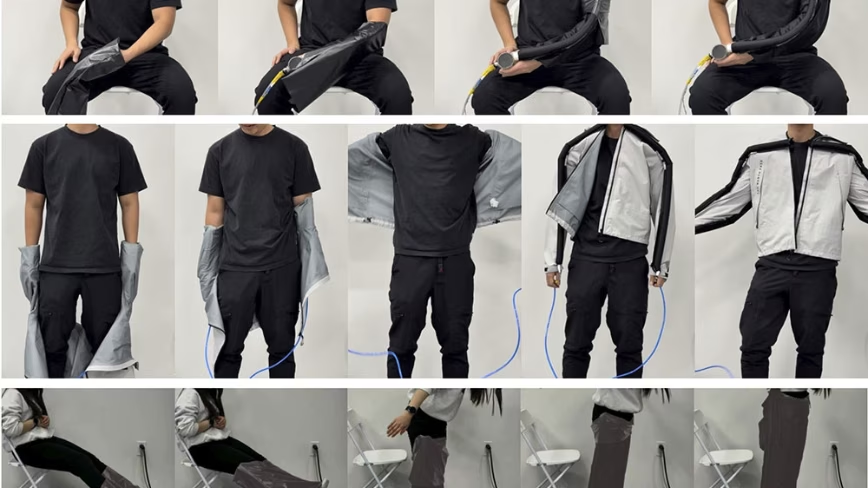
Researchers from KAIST in South Korea and Stanford University have collaborated to create innovative clothing designed to assist individuals with mobility challenges. The new garments are engineered to automatically climb onto the wearer, addressing the daily difficulties faced by millions of older adults and disabled people. Tasks like pulling on a sleeve, which often require assistance due to limitations with buttons, shoulder movement, and gravity, can now be managed independently. This technological advancement aims to restore a degree of autonomy and ease to the fundamental act of getting dressed. The development signifies a significant step forward in assistive clothing technology, potentially improving the quality of life for many.
This project highlights the growing intersection of robotics, materials science, and wearable technology. The goal is to create practical solutions for everyday problems that disproportionately affect vulnerable populations. Further details on the specific mechanisms and materials used are expected as the research progresses. The collaboration between these two leading institutions underscores the global effort to leverage advanced technology for social good.
This innovation addresses a critical unmet need in assistive technology, focusing on enhancing personal autonomy for individuals facing physical limitations. By automating a fundamental daily task, the technology has the potential to reduce reliance on caregivers and improve self-esteem. Future considerations will likely involve scalability, cost-effectiveness for widespread adoption, and user interface design to ensure intuitive operation. The long-term impact could redefine personal care and independent living, aligning with societal shifts towards aging populations and inclusive design principles.
AI-generated to prompt reflection — not editorial opinion, not advice, not a statement of fact. How this works.