Karachi Railway Projects Displace Thousands, Raising Rehabilitation Concerns
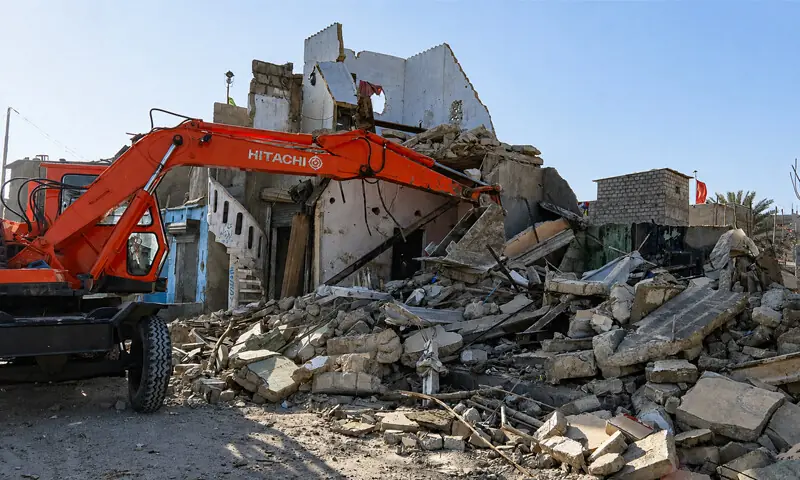
Proposed upgrades to Pakistan Railways' Main Line-1 (ML-1) and the revival of the Karachi Circular Railway (KCR) in Karachi, Pakistan, promise significant transport improvements but will necessitate the demolition of numerous long-standing settlements. While the focus has been on clearing perceived 'encroachments' on railway land, the critical issue of rehabilitating the thousands of displaced residents has received insufficient attention. These informal settlements, including areas like Ghareebabad-PIDC and Kashmir Colony, have developed over decades due to a lack of affordable formal housing, with unofficial estimates suggesting nearly 62 percent of Karachi's population resides in such informal settlements. The official justification for demolition, citing illegal occupation of railway land, overlooks the systemic failures in urban planning and housing provision that led to their existence. Furthermore, the selective enforcement of land reclamation, often targeting low-income communities while overlooking encroachments by commercial or politically connected entities, raises questions of equity and fairness. The state has a constitutional responsibility to facilitate housing, yet public housing policies have consistently failed to meet demand, pushing low-income households into informal housing solutions. These settlements are not temporary but have evolved into functioning neighborhoods with established social networks, representing long-term urbanization processes rather than isolated illegal occupations. Infrastructure projects often view land purely as an engineering requirement, failing to recognize the social and economic value these spaces hold for residents, whose homes are connected to employment, education, healthcare, and community support systems. Effective rehabilitation requires comprehensive surveys that assess household size, income sources, employment, schooling, disability, and dependence on local services, not just the number of structures. Transparency in rehabilitation surveys, with public access to reports before demolition, is crucial for accountability and to prevent manipulation. Compensation processes are also flawed, often determined late and leaving affected households in uncertainty.
The Karachi railway infrastructure projects highlight a recurring tension between national development goals and the rights and well-being of urban populations, particularly those in informal settlements. The narrative frames the issue as a conflict between 'progress' and 'encroachment,' yet a deeper analysis reveals systemic failures in urban governance, housing policy, and equitable land management. The selective enforcement of land reclamation, targeting vulnerable communities while less scrutinized occupations persist, suggests that 'public interest' may be inconsistently applied. Future urban planning must integrate socio-economic impact assessments and robust rehabilitation frameworks from the project's inception, recognizing informal settlements as complex social ecosystems rather than mere physical obstacles. This requires a shift from viewing land solely as a resource for engineering to understanding its role as a foundation for livelihoods and community stability, ensuring that infrastructure development contributes to inclusive urban futures rather than exacerbating existing inequalities.
AI-generated to prompt reflection — not editorial opinion, not advice, not a statement of fact. How this works.