Karachi Ranks Near Bottom of Global Liveability Index
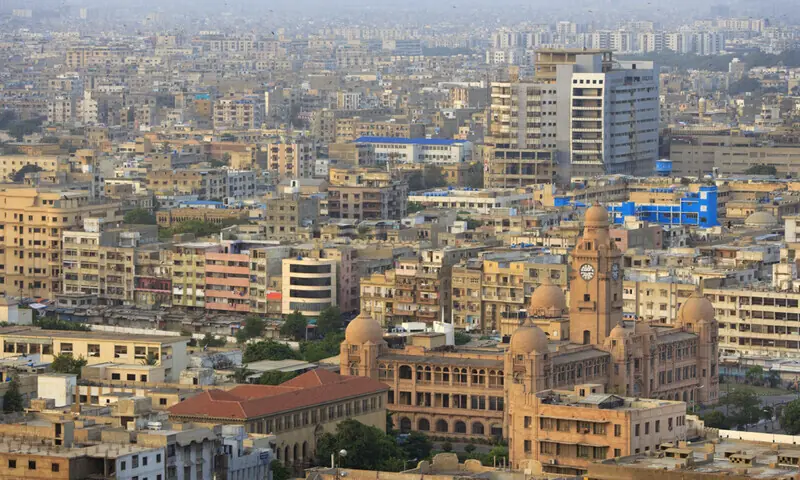
Karachi has been identified as one of the world's least liveable cities, securing the 170th position out of 173 cities in the Economist Intelligence Unit's (EIU) annual Global Liveability Index for 2026. Only Dhaka, Tripoli, and Damascus were ranked lower, while Tehran and Kyiv scored slightly higher. The EIU's index assesses living conditions based on stability, healthcare, culture and environment, education, and infrastructure. Karachi received an overall score of 43 out of 100, matching Algiers. The city performed poorly across most categories, with a score of 20 for stability, 36 for culture and environment, and 52 for infrastructure. It achieved a higher score of 54 in healthcare and a notable 75 in education. The report noted that congested roads and crime often negatively impact the liveability scores of major urban centers. Cities in the Middle East also saw declines in their rankings, partly attributed to regional conflicts, with Muscat experiencing the largest drop of 14 places to 123rd following drone strikes. Doha fell seven spots to 108th, while Dubai and Abu Dhabi each dropped four places to 79th and 76th, respectively. Copenhagen maintained its top position, followed by Vienna and Melbourne, with Vancouver and Tokyo being the only North American and megacity, respectively, in the top ten.
The Economist Intelligence Unit's Global Liveability Index highlights systemic challenges in urban development and governance. Karachi's low ranking, particularly in stability and infrastructure, suggests that persistent issues like crime and congestion are not being adequately addressed. While education scores are relatively high, this single positive metric is overshadowed by broader deficiencies that detract from overall quality of life. The index's methodology, which considers factors like healthcare and environment, underscores the interconnectedness of urban well-being. As global populations increasingly concentrate in cities, understanding and rectifying these liveability deficits will be crucial for sustainable urban futures and mitigating social and economic disparities. The report also indicates how geopolitical instability can directly impact urban environments, affecting everything from infrastructure to resident safety.
AI-generated to prompt reflection — not editorial opinion, not advice, not a statement of fact. How this works.