Karachi's Mangrove Park Features Floating Bridge for Eco-Tourism
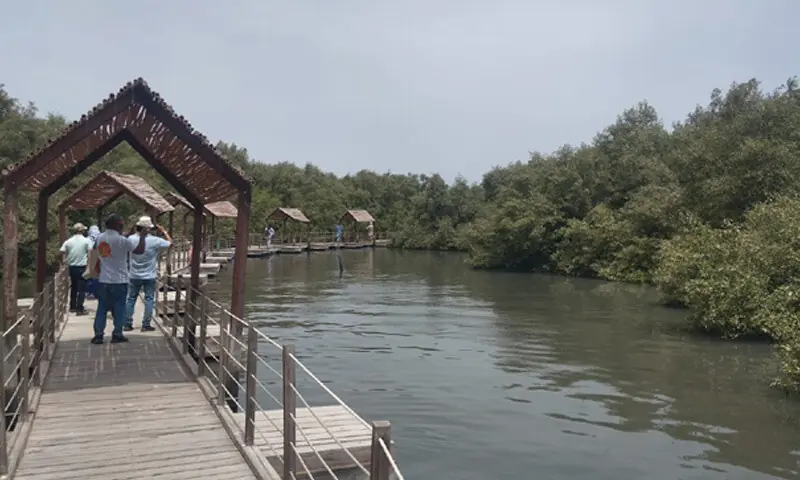
The Mangrove Biodiversity Park at Korangi Creek in Karachi, established two years ago, offers an eco-tourism experience featuring a 700-meter floating wooden bridge. Designed by architect Tariq Alexander Qaiser, the bridge allows visitors to explore the dense mangrove forest, which is home to diverse wildlife including hundreds of birds, swimming camels, mongooses, and snakes. Initially open to educational institutions, the park later opened to the general public, leading to concerns about destruction from overcrowding. Consequently, an entry fee was introduced to ensure appreciation and preservation of the area. The park, covering approximately 50 hectares, is a 30-minute drive from the city and is designed as a conservational and wellness space. The Sindh Tourism Development Corporation plans for expansion, aiming to attract young generations for research on mangroves and their ecological significance. Curator Zara Hirjee highlighted that the park is constructed using recyclable and vernacular materials, including wood from a disassembled ship and bamboo, emphasizing the mangroves' role as a natural defense against coastal storms. The floating bridge adjusts to tidal changes, revealing mangrove roots and marine life at low tide, and migratory birds in December. The park operates on a self-sustained model, with ticket revenue funding its upkeep and local community members being hired for maintenance. The dominant mangrove species is Avicennia Marina, known for its resilience to salinity and industrial waste from the nearby Korangi Industrial Area. The park also attracts around 72 bird species and produces fragrant mangrove flowers used in expensive perfumes, alongside housing unique wildlife like swimming camels and various snakes.
The development of the Mangrove Biodiversity Park in Karachi represents a strategic effort to balance urban expansion with ecological preservation and tourism. By creating accessible infrastructure like the floating bridge and implementing an entry fee, authorities aim to manage visitor impact while generating revenue for conservation. The park's design, utilizing recycled and local materials, aligns with sustainable development principles. However, the reported concerns about nearby multi-storey building construction highlight an ongoing tension between development pressures and environmental protection, a common challenge in rapidly urbanizing coastal areas. Future success will likely depend on robust environmental impact assessments and enforcement mechanisms to safeguard the mangroves' critical role in coastal defense and biodiversity, especially in the face of climate change-induced sea-level rise and increased storm intensity.
AI-generated to prompt reflection — not editorial opinion, not advice, not a statement of fact. How this works.