Karachi Water Crisis: JI Urges PM to Release Funds for K-IV Project
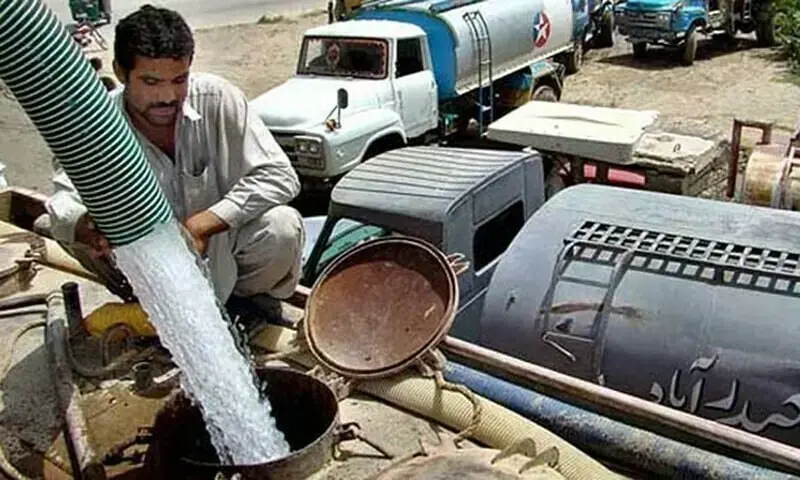
The Jamaat-i-Islami (JI) in Karachi has formally urged Prime Minister Shehbaz Sharif to release the Rs40 billion needed to complete the K-IV water supply project, citing the city's severe water shortage. JI-Karachi chief Monem Zafar highlighted a report indicating the first phase of the K-IV project, intended to provide 260 million gallons daily, is now slated for completion in December 2029. He called for the Sindh government to prioritize the K-IV augmentation component and for the federal government to disburse all remaining funds within the current fiscal year to avoid further delays. Zafar expressed deep concern that Karachi, with its population of approximately 35 million, faces an acute water deficit, receiving only about 550 million gallons daily against a requirement of 1,200 million gallons. He criticized the federal budget's meager allocation of Rs8 billion for the project, contrasting it with the Rs40 billion requirement, and pointed to a previous allocation of only Rs3.2 billion. Zafar noted that the K-III project, completed during the tenure of former city nazim Naimatullah Khan, was the last major water supply initiative for Karachi. He stated that despite the K-IV project's PC-II being prepared over 21 years ago, it remains unfinished, with both federal and provincial governments blaming each other for the delays. Zafar argued that the Sindh government's failure to complete the augmentation project, even with World Bank assistance, and the federal government's insufficient funding demonstrate a lack of seriousness from both administrations. He concluded by emphasizing that Karachi residents, who contribute significantly to national revenue, are forced to spend billions annually on private water tankers, funds that could have been invested in education and healthcare if the K-IV project had been completed on time.
The protracted delay in completing Karachi's K-IV water project, spanning over two decades, highlights systemic governance challenges in Pakistan's urban infrastructure development. The inter-governmental blame game between federal and provincial authorities, coupled with insufficient budgetary allocations from the federal government, suggests a disconnect between stated development priorities and actual resource commitment. This situation creates significant economic and social strain on Karachi's 35 million residents, forcing them to rely on expensive private water solutions, thereby diverting capital from more productive sectors like education and healthcare. Looking ahead, the project's completion hinges not only on financial releases but also on robust inter-agency coordination and transparent project management, potentially requiring independent oversight mechanisms to ensure timely delivery and prevent future infrastructure bottlenecks in a rapidly urbanizing nation.
AI-generated to prompt reflection — not editorial opinion, not advice, not a statement of fact. How this works.