Keiko Fujimori Inaugurated as Peru's President, Pledges Fight Against Crime and Climate Change
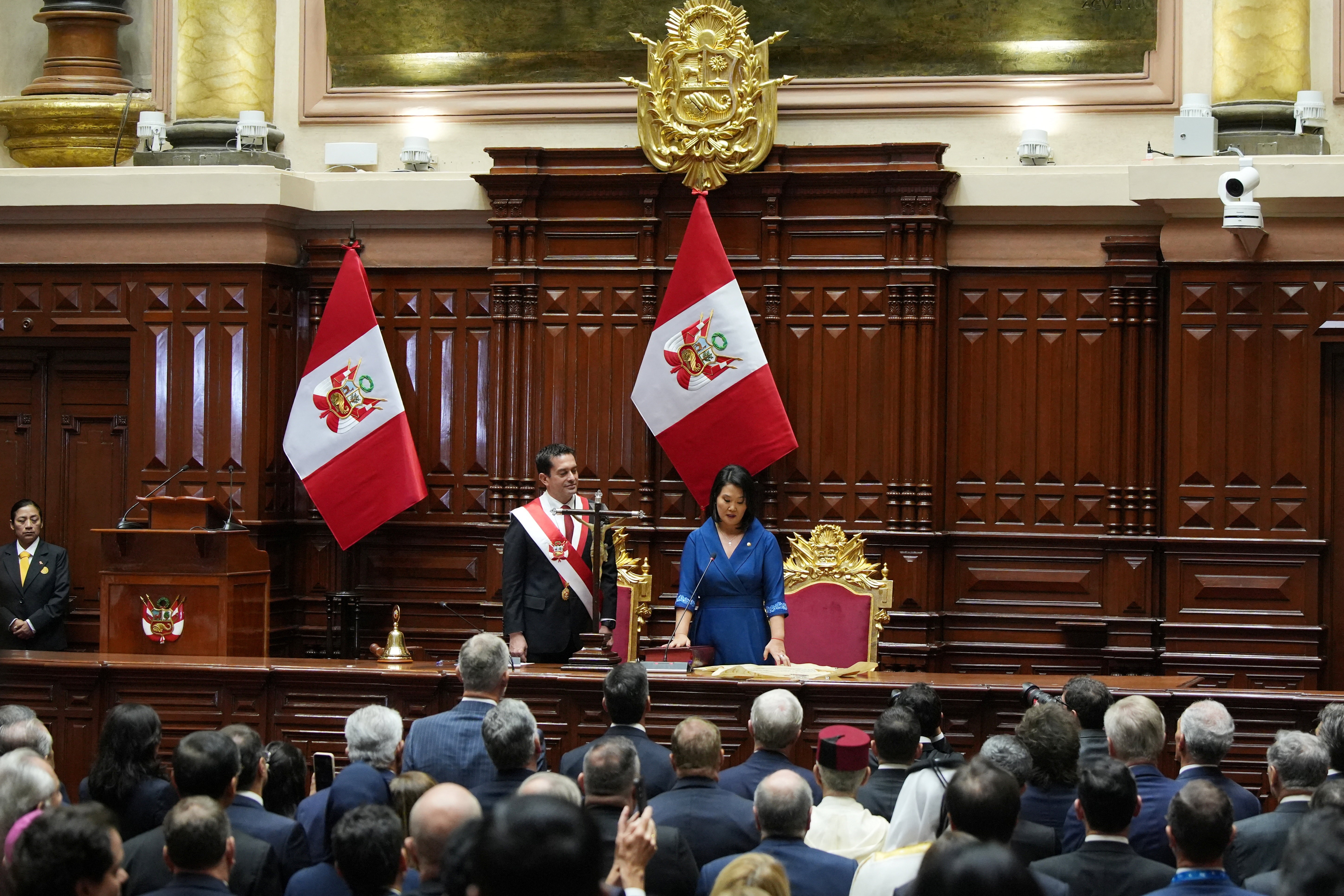
Keiko Fujimori has officially assumed the presidency of Peru in a solemn ceremony at the National Congress, marking the return of the right-wing to power in Lima. Her inauguration was attended by notable international figures, including Argentina's President Javier Milei. Fujimori declared that public security and combating climate change will be the central pillars of her administration. To address rising violence and crime, she announced that the Armed Forces will temporarily lead security operations in the most affected regions, working alongside the National Police. Her administration also plans to enhance public safety through technological advancements, such as a national video surveillance system, AI-powered platforms for crime prediction, and new command centers for operational coordination.
This marks the return of the Fujimori name to the Peruvian executive after 26 years. Fujimori secured victory in the election held on June 7th, with the official results announced on July 3rd, showing a narrow margin of 49,641 votes over her opponent, Roberto Sánchez. This was Fujimori's fourth presidential bid, and her first win after three previous close defeats. Sánchez has indicated he may not recognize the results and plans to appeal to international bodies.
Fujimori inherits a nation deeply divided and grappling with a decade-long political crisis, characterized by a rapid succession of removed presidents. She will be sworn in by interim president José María Balcázar Zelada. Her party, Fuerza Popular, holds the largest blocs in Congress with 41 deputies and 22 senators, but will need to negotiate with other parties to achieve a majority. At 51, Fujimori has been active in politics since her youth, accompanying her father, former dictator Alberto Fujimori, on official duties. She holds a business administration degree from the United States and previously served in Congress, elected with a record number of votes in 2006. She was also subject to a period of pre-trial detention between 2018 and 2020 as part of an investigation into alleged irregular campaign financing, a case that was later archived.
Keiko Fujimori's ascent to the Peruvian presidency, following a closely contested election, signifies a significant political shift. Her platform, emphasizing security and climate action, reflects pressing national concerns. The integration of military forces into domestic security and the proposed technological surveillance measures represent a dual approach to tackling crime, balancing immediate intervention with predictive capabilities. However, the effectiveness and societal implications of these security strategies, particularly concerning civil liberties and potential overreach, warrant careful observation. Fujimori's administration faces the immediate challenge of governing a deeply polarized nation and a fragmented Congress, necessitating robust negotiation and consensus-building. The historical context of her family's political legacy and past legal scrutiny will undoubtedly shape public perception and institutional dynamics during her term. The administration's success will hinge on its ability to bridge political divides, foster stability, and implement policies that address both immediate security threats and long-term developmental needs within Peru's complex socio-economic landscape.
AI-generated to prompt reflection — not editorial opinion, not advice, not a statement of fact. How this works.