Key US Military Bases in the Middle East Under Scrutiny Amid Regional Tensions
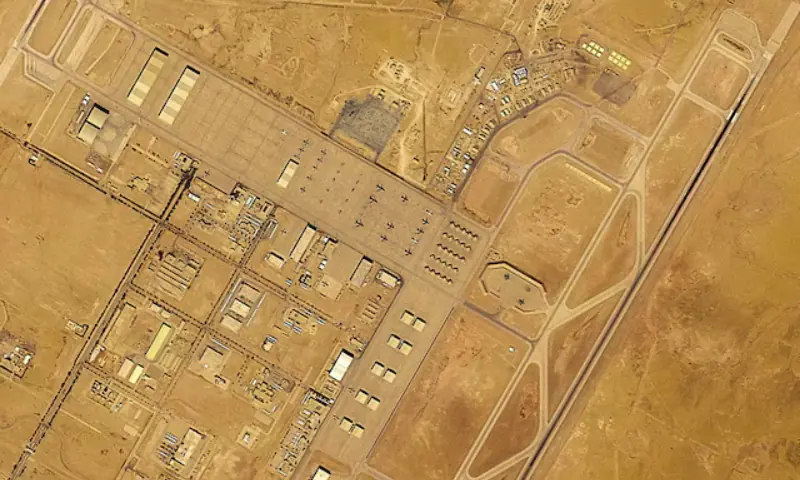
The Middle East hosts several major US military installations that have become focal points amid escalating tensions with Iran. These bases, operating under the US military’s Central Command (Centcom), support a wide array of missions, from logistics and refueling to combat operations, according to Elizabeth Dent, a senior fellow at the Washington Institute for Near East Policy. Iran has targeted these facilities, accusing Gulf states of facilitating US operations, a claim Dent suggests has some validity, though she disputes the notion that all bases are inherently offensive.
In Bahrain, the US Navy's Fifth Fleet and Naval Forces Central Command headquarters are located, utilizing a deep-water port capable of accommodating large vessels since 1948. Iraq hosts US troops as part of the anti-ISIS coalition, primarily at Erbil airport and al-Harir air base, with the coalition mission set to conclude by September. Jordan's Muwaffaq Salti Air Base is a significant hub for various US aircraft and air defense systems, having recently experienced Iranian attacks that killed three US service members. Kuwait hosts substantial US forces, including Camp Arifjan and Ali al-Salem Air Base, a key airlift hub, where six US service members have been killed since the conflict began.
Qatar's Al Udeid Air Base is the largest US facility in the Middle East, serving as a command center for Centcom's air and special operations forces. The United Arab Emirates' Al Dhafra Air Base houses the US 380th Air Expeditionary Wing, a critical training and operational hub for aircraft and drones. Saudi Arabia hosts US troops at Prince Sultan Air Base, which has also faced attacks, resulting in the death of a US service member in March. Despite these attacks, experts like Neil Quilliam of Chatham House do not anticipate Gulf states reducing the US military presence, though Washington may reassess its posture.
The strategic positioning of US military bases across the Middle East reflects a complex interplay of geopolitical objectives, including counter-terrorism, regional stability, and power projection. Iran's targeting of these bases highlights the evolving nature of asymmetric warfare, where traditional military assets become vulnerable to drone and missile attacks. This dynamic forces a re-evaluation of basing strategies, potentially favoring more dispersed and agile deployments as suggested by shifts towards western Middle East locations. The dual role of these bases as both defensive bulwarks and potential launchpads for offensive operations creates inherent tensions, particularly with regional adversaries like Iran. Future considerations will likely involve balancing the need for forward presence with the increasing risks of escalation and the economic implications of prolonged military commitments in a volatile region.
AI-generated to prompt reflection — not editorial opinion, not advice, not a statement of fact. How this works.