Khamenei's Funeral and the War of Narratives: What Message Did the Regime Aim to Convey?
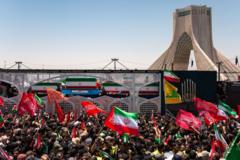
The funeral procession for Ali Khamenei, the former Supreme Leader of Iran, served as the first major political test for the Iranian government following his death. This event provided a significant opportunity for the regime to shape the narrative surrounding his passing, targeting both domestic and international audiences. The government sought to control the interpretation of his death and its implications. The funeral was designed to project an image of national unity and continuity, reinforcing the legitimacy of the ruling establishment. It was also a platform to communicate specific messages about the future direction of the country and its political system. The regime aimed to manage public perception and counter any potential dissent or alternative narratives that might emerge. The event was carefully orchestrated to project strength and stability in the face of a significant leadership transition.
The funeral of a prominent political figure like Ali Khamenei presents a critical juncture for state-controlled media to assert a specific narrative. The regime's efforts to shape the interpretation of his death highlight the ongoing challenge of maintaining ideological coherence and political legitimacy in the face of internal and external pressures. This event underscores the strategic use of public ceremonies to reinforce state power and influence public opinion. In the coming decade, as information ecosystems become more fragmented and AI-driven, the ability of states to unilaterally control narratives will be increasingly tested, potentially leading to more sophisticated methods of counter-narrative dissemination and a greater emphasis on digital resilience.
AI-generated to prompt reflection — not editorial opinion, not advice, not a statement of fact. How this works.