Khoksa Residents Block Railway Demanding Benapole Express Stop Restoration
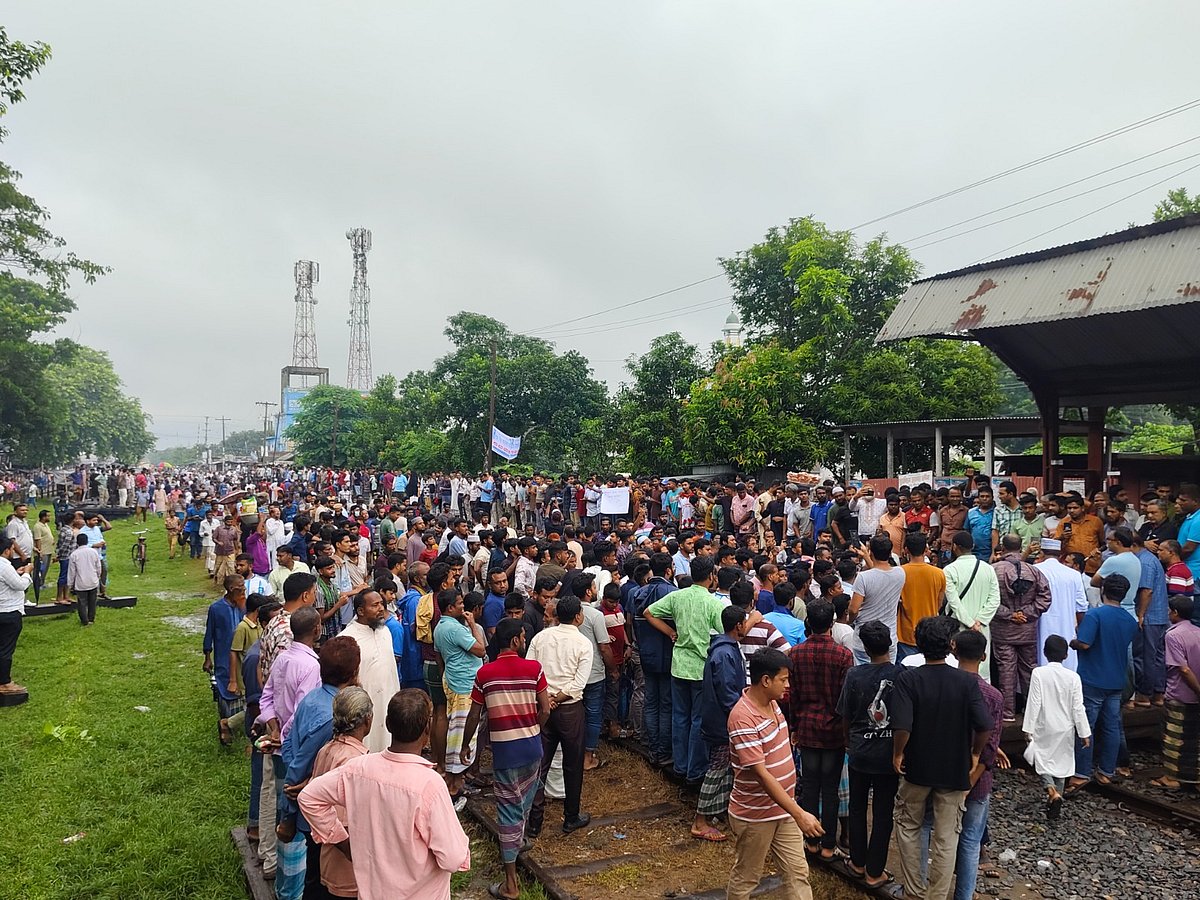
Local residents in Khoksa, Kushtia, have blockaded the railway tracks at Khoksa Railway Station, bringing train services to a halt. The protest began on Thursday afternoon at 4:30 PM, with over a hundred people occupying the tracks. The demonstration arose from dissatisfaction with a decision made by the Ministry of Railways on Wednesday to relocate the Benapole Express train's stop from Khoksa to Kumarkhali Station. This decision had caused significant anger and tension since Wednesday night, leading to calls for protest on social media. Despite the rain, demonstrators have vowed to continue their blockade until their demands are met. Member of Parliament Afzal Hossain, representing Kushtia-4 (Kumarkhali-Khoksa), arrived at the station around 6:00 PM and attempted to reassure protestors, stating he had confirmed with higher authorities that the train would stop at both Khoksa and Kumarkhali. However, his assurances were met with chants of "Fake, Fake" from the crowd. According to Anisur Rahman, booking assistant at Kumarkhali Railway Station, the Benapole Express arrived at 5:50 PM but could not depart due to the blockade at Khoksa preventing the line from being cleared. Abdul Wadud, Additional Deputy Commissioner (Revenue) of Kushtia, stated that the approval for changing the Benapole Express's stop at Khoksa Railway Station has been canceled, and the train will continue to make its usual stop there. He also indicated that a decision for the train to stop at Kumarkhali would likely be made within a few days.
This situation highlights the challenges of balancing national infrastructure decisions with local community needs and expectations. The rapid reversal of the Ministry of Railways' decision, prompted by public protest and political intervention, suggests a potential lack of prior consultation with affected communities or an underestimation of the local impact. While restoring the stop addresses immediate community concerns, the underlying process raises questions about efficient and transparent governance in public service provision. Future planning for transportation routes might benefit from more robust stakeholder engagement to anticipate and mitigate such disruptions, ensuring that infrastructure development aligns with both national objectives and regional accessibility.
AI-generated to prompt reflection — not editorial opinion, not advice, not a statement of fact. How this works.