Kilauea Volcano Erupts, Spewing Ash Plume Up to 5,000 Meters
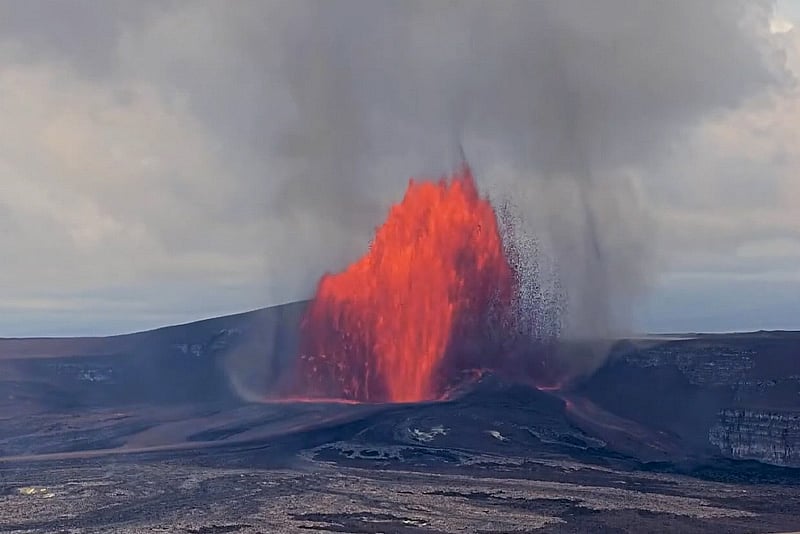
The Kilauea volcano in Hawaii, a state of the United States, has begun erupting again. The plume of smoke and ash released from the volcano has risen to an altitude of approximately five thousand meters. This renewed activity marks a significant event for the region, drawing attention to the dynamic geological processes at play. Further details are expected to be provided in video reports. The eruption highlights the ongoing volcanic nature of the Hawaiian Islands, which are formed by volcanic activity over a hotspot in the Earth's mantle. Kilauea is one of the most active volcanoes in the world, and its eruptions are closely monitored by scientists. The current event is being observed for its potential impact on air travel and local communities. The height of the ash plume is a key indicator of the eruption's intensity and the dispersal pattern of volcanic materials. Residents and authorities are likely assessing the situation for any immediate risks.
The renewed eruption of Kilauea volcano presents a potent reminder of Earth's geological forces. From a systems perspective, such events are natural, albeit disruptive, manifestations of mantle plume activity driving island formation. The significant ash plume height of 5,000 meters indicates substantial energy release, posing immediate considerations for air traffic management and local environmental conditions. Looking ahead, the frequency and intensity of such eruptions, influenced by underlying magma dynamics, will continue to shape the island's landscape and necessitate robust, adaptive hazard response strategies. Understanding these cycles is crucial for sustainable development and safety in volcanically active regions.
AI-generated to prompt reflection — not editorial opinion, not advice, not a statement of fact. How this works.