Kim Jong Un Marks Korean War Armistice Anniversary with Daughter Prominently by His Side
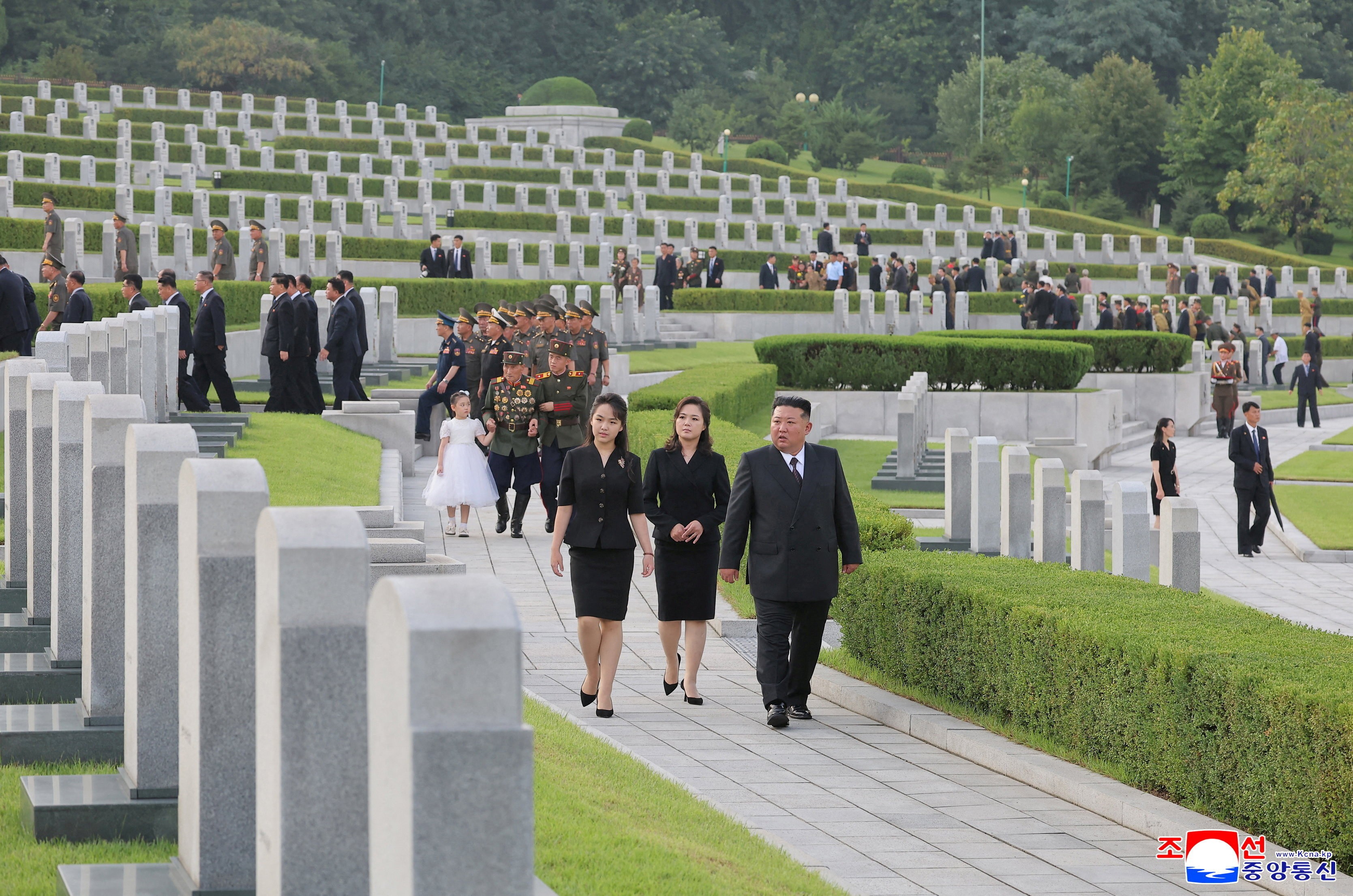
North Korean leader Kim Jong Un commemorated the 73rd anniversary of the Korean War Armistice on July 26, 2026, with his daughter, Kim Ju Ae, present for the first time at these specific memorial events. The state news agency KCNA reported that Kim visited war memorials, paid respects to fallen soldiers, and met with veterans. He reiterated Pyongyang's claim of a "great victory" in the 1950-1953 conflict, which concluded with an armistice rather than a peace treaty. State media photographs and videos showed Kim Ju Ae walking alongside her father, positioned centrally during ceremonies, and greeting elderly veterans, underscoring her increasingly visible public role. This marked Ju Ae's first participation in the armistice anniversary commemorations and her initial visits to the Cemetery of Martyrs of the Fatherland Liberation War and the Revolutionary Martyrs Cemetery on Mount Taesong, near Pyongyang. South Korea's Unification Ministry confirmed these were new public appearances for her. The South Korean National Intelligence Service (NIS) assesses that Ju Ae is being positioned as Kim's successor, citing "reliable intelligence" and her periodic appearances in state media. Previous public showings of Ju Ae have included her reportedly driving a new tank and firing a rifle. Kim also paid tribute at the cemetery for Chinese volunteer soldiers, including Mao Anying, son of Mao Zedong, signaling warming relations with Beijing.
The prominent public role of Kim Ju Ae during the Korean War Armistice anniversary, particularly her presence at sensitive historical sites and alongside her father, suggests a deliberate strategy of succession grooming. This public display, coupled with previous media appearances showcasing her in activities like operating military hardware, aims to normalize her image as a future leader. The inclusion of tributes to Chinese war efforts also reinforces geopolitical alliances. From a systemic perspective, this carefully managed visibility seeks to solidify internal legitimacy and project an image of stability and continuity to both domestic and international audiences, especially in the context of North Korea's ongoing nuclear program and economic challenges. The long-term effectiveness of this succession strategy will depend on various internal and external factors, including the geopolitical climate and the regime's ability to maintain control over information flow.
AI-generated to prompt reflection — not editorial opinion, not advice, not a statement of fact. How this works.