Kimi K3 Unveils Two Key Technical Innovations for AI Model Efficiency
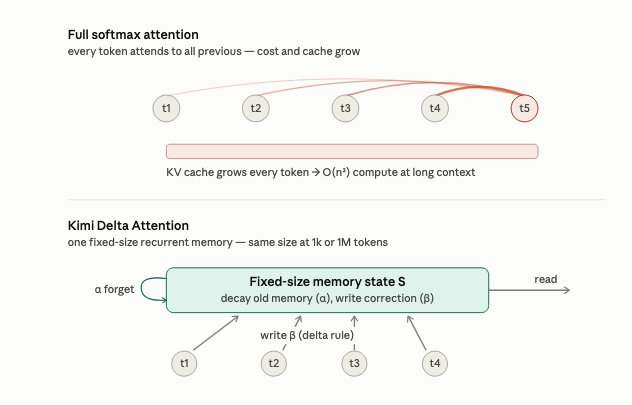
Kimi K3 has introduced two significant technical advancements aimed at enhancing the performance and efficiency of its AI models. The first innovation is Kimi Delta Attention (KDA), a novel hybrid linear-attention mechanism. KDA reportedly achieves over six times faster decoding speeds when processing long contexts. This is achieved through a refined gated delta rule incorporating fine-grained, channel-wise gating.
The second advancement is Attention Residuals, designed as a direct replacement for conventional residual connections. This new approach is stated to improve the overall efficiency of the AI model's training process. These developments are expected to contribute to more powerful and resource-efficient AI solutions.
AI developers are continuously seeking architectural innovations to overcome computational bottlenecks, particularly with the increasing demand for processing long contexts and improving training efficiency. Kimi K3's introduction of Kimi Delta Attention and Attention Residuals reflects a broader industry trend toward optimizing attention mechanisms and network structures. These advancements could potentially lower the barrier to entry for complex AI applications by reducing computational costs and accelerating development cycles. The long-term impact will depend on the scalability, generalization capabilities, and robustness of these new techniques across diverse real-world tasks and hardware platforms.
AI-generated to prompt reflection — not editorial opinion, not advice, not a statement of fact. How this works.