Kindia: Parish Access Dispute Fuels Tensions Between Faithful and Market Vendors
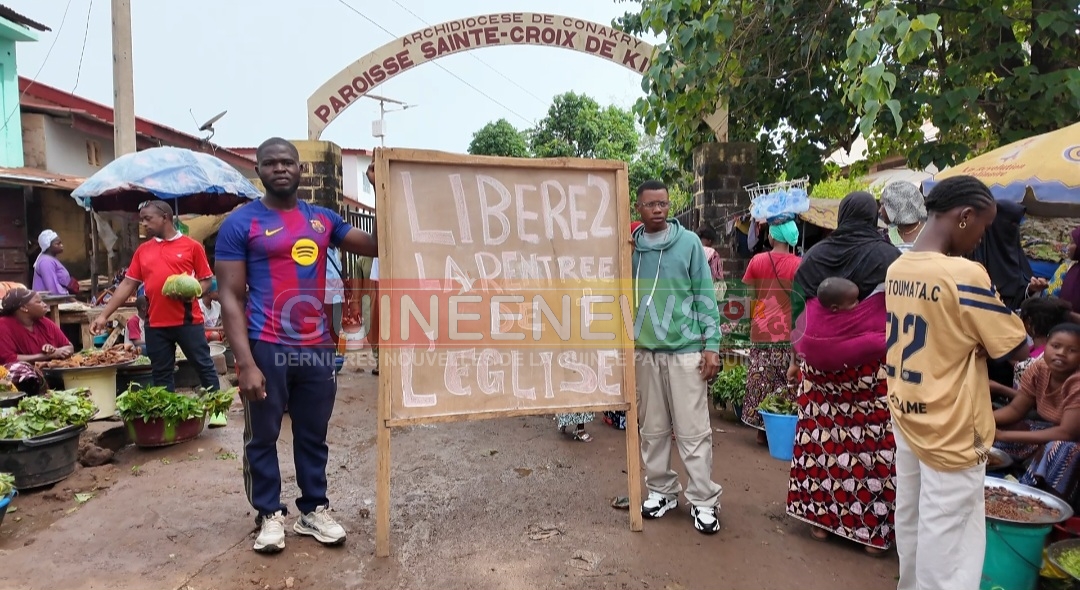
Tensions are escalating in Kindia, Guinea, over the persistent occupation of access routes to the Sainte-Croix parish by market vendors. For several years, stalls from the central market have encroached upon the historic parish's grounds, located in the heart of the city center. This ongoing situation is a source of significant conflict between the Christian community and certain traders operating in the grand market. The parish authorities and faithful have voiced strong opposition to this encroachment, which they argue obstructs access to their place of worship and disrupts the sanctity of the religious site. The market vendors, however, maintain their right to operate in the area, citing economic necessity and long-standing presence. This dispute highlights a complex intersection of religious space, urban commerce, and public access in Kindia. The situation remains unresolved, with calls for a definitive solution from both sides to prevent further escalation of tensions. The historical significance of the Sainte-Croix parish adds another layer to the dispute, as its physical integrity is perceived to be under threat.
This conflict in Kindia illustrates a common urban challenge where commercial activity intersects with established religious or public spaces. The core issue appears to be a lack of clear zoning or effective urban planning that accommodates both economic needs of vendors and the functional requirements of the Sainte-Croix parish. The prolonged nature of the dispute suggests a failure in local governance to mediate effectively or enforce existing regulations. Moving forward, a sustainable resolution will likely require a multi-stakeholder approach, potentially involving the establishment of designated market zones, clear property boundaries, and enforceable agreements that respect both commercial livelihoods and the integrity of religious sites. The long-term implications for Kindia's urban development and social cohesion depend on addressing such spatial conflicts proactively.
AI-generated to prompt reflection — not editorial opinion, not advice, not a statement of fact. How this works.