Knockoff Browser Extension Filters Out Dubious Brands on Amazon
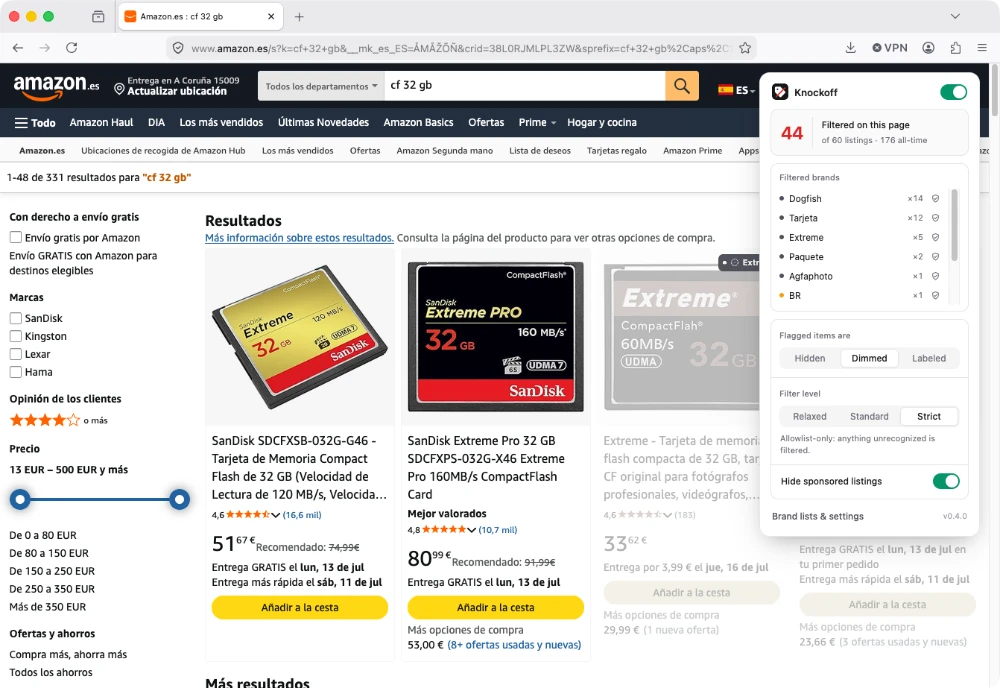
A new browser extension called Knockoff, developed by Josh Pigford, aims to improve the Amazon shopping experience by filtering out products from obscure or questionable brands. Available for Chrome and Firefox, with a pending release for Safari, Knockoff helps users identify and hide or flag items from unfamiliar manufacturers. The extension utilizes a database of recognized brands and analyzes unknown ones for characteristics like excessive capitalization or unpronounceable consonant clusters. Examples of brands it can filter include WNPETHOME, EHEYCIGA, and JOYIN. Users have the flexibility to completely hide these "knockoff" results, dim them, or simply label them. Knockoff offers adjustable filtering strictness levels: relaxed, standard, or strict. It also allows users to correct misclassifications by interacting with the product labels. As an added feature, the extension can conceal sponsored product listings. Knockoff operates locally within the user's browser, requiring no account and performing no tracking. It connects to the internet once daily to update its brand list and needs permission to access data from Amazon's international websites. While it won't alter Amazon's search algorithm, it significantly reduces the presence of unwanted items in search results.
The emergence of browser extensions like Knockoff highlights a growing user demand for curated online shopping experiences, particularly on platforms like Amazon where search result quality can be inconsistent. This tool addresses user frustration with brand noise by leveraging data analysis and user feedback to create a more personalized interface. From a systems perspective, such extensions represent a decentralized approach to content moderation, shifting control from platform providers to individual users. As AI increasingly influences e-commerce, tools that empower consumers to define their own acceptable product visibility will likely gain traction, potentially influencing how marketplaces design their search and recommendation algorithms in the future. The extension's privacy-focused design, operating locally without user tracking, also aligns with evolving consumer expectations regarding data protection.
AI-generated to prompt reflection — not editorial opinion, not advice, not a statement of fact. How this works.