Kolkata Journalists Protest After Attack During Student Protests
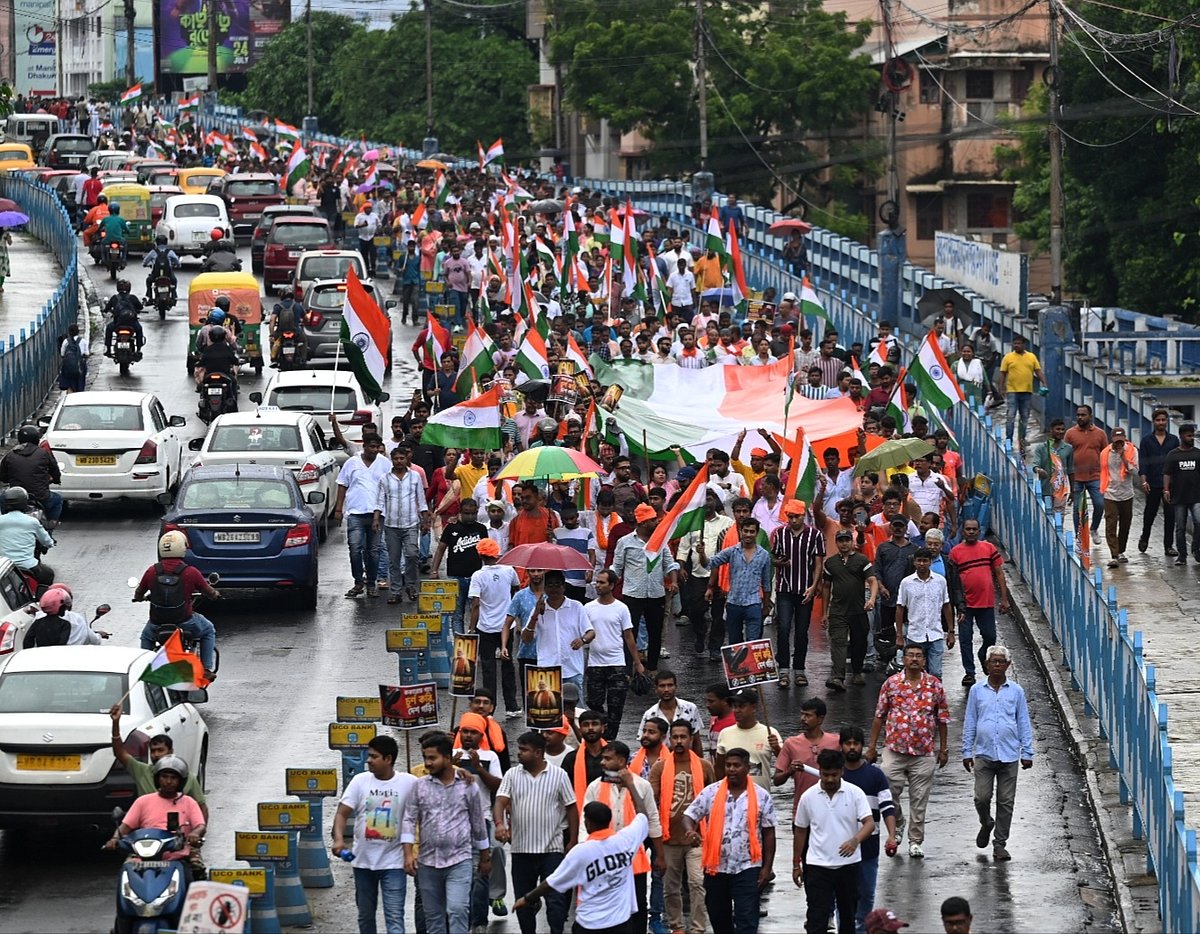
Journalists in Kolkata, India, held a protest march on Monday following an attack on reporters during recent demonstrations against exam paper leaks. Members from 46 press clubs across West Bengal, including the Kolkata Press Club and Indo-Bangla Press Club, participated in the rally. The procession began in front of the Kolkata Press Club, with journalists from print and electronic media joining the march. They proceeded to Dharamtala's Dorina Crossing, chanting slogans demanding an end to journalist harassment and improved safety measures. Participants urged the state government to ensure the security of journalists throughout Kolkata and West Bengal. Separately, the Bharatiya Janata Party (BJP) organized a 'Tiranga Yatra' (Tricolor March) in Kolkata, advocating for national peace and countering alleged anti-national conspiracies. This march, devoid of placards, featured participants carrying the Indian flag and concluded at Dharamtala's Dorina Crossing. The BJP called for the immediate arrest and prosecution of individuals involved in anti-national activities, particularly those exploiting the ongoing protests demanding the resignation of the Union Education Minister. The recent student protests, organized by left-wing student organizations and the Korocho Janata Party (CJP) on Friday, also saw clashes with police at Dharamtala's Dorina Crossing, during which several journalists were reportedly assaulted. Following these incidents, six cases were filed at Kolkata's Hare Street Police Station and one at Entally Police Station, with charges including the controversial Goonda Act. Police have already arrested several protesters in connection with these cases.
The events in Kolkata highlight the escalating tensions surrounding exam integrity and political expression in India. The physical assault on journalists during student-led protests against exam paper leaks underscores a concerning trend of rising hostility towards media personnel covering sensitive public events. This situation raises questions about the protection afforded to journalists and the potential for intimidation to stifle reporting. The parallel BJP march, framed around national security and anti-conspiracy rhetoric, appears to leverage the existing public discontent for political mobilization. The invocation of the Goonda Act in the police cases against protesters suggests a firm stance by authorities, potentially aimed at deterring further unrest but also risking the suppression of legitimate dissent. The interplay between student activism, government response, and political maneuvering creates a complex environment where the fundamental rights to protest, report, and express dissent are being tested.
AI-generated to prompt reflection — not editorial opinion, not advice, not a statement of fact. How this works.