Korean and Japanese researchers propose sideways DRAM stacking for cooler, faster AI memory
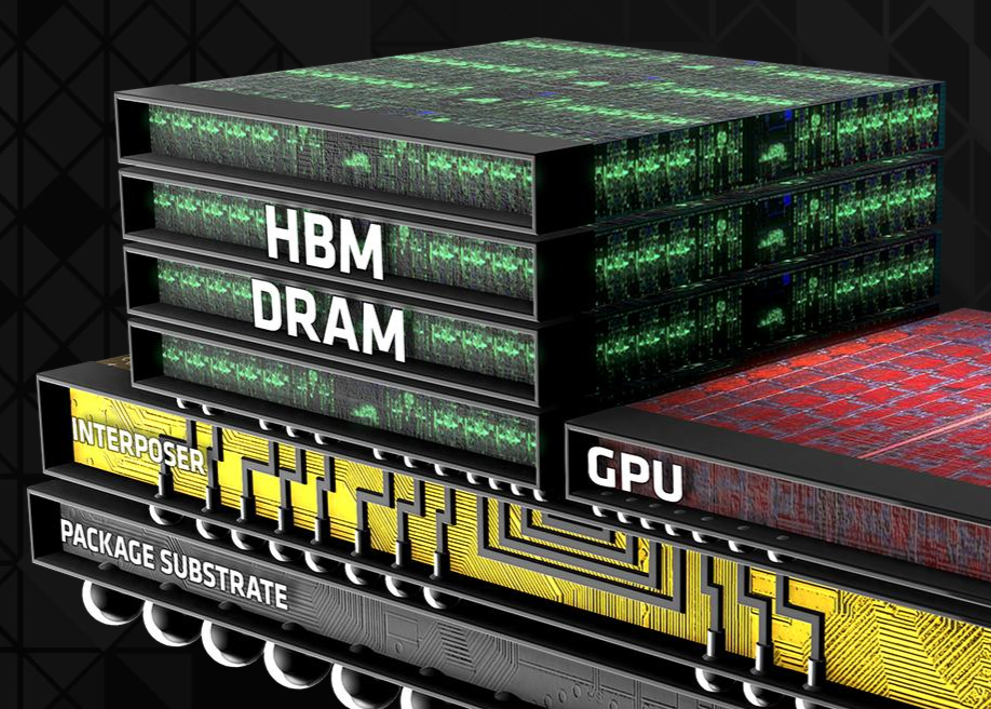
Researchers from South Korea and Japan have developed innovative designs for stacking DRAM chips sideways, aiming to overcome the limitations of current High Bandwidth Memory (HBM) technology. These new approaches, dubbed V-Die by the Korean team and MOSAIC by the Japanese team, address critical challenges in AI memory, including heat dissipation, bandwidth, and density. Traditional HBM relies on vertically stacked DRAM dies connected by Through-Silicon Vias (TSVs), which can lead to significant heat buildup and bandwidth bottlenecks as designs become more complex. The proposed sideways stacking method offers a potential solution to these issues. By orienting the DRAM dies horizontally, the designs facilitate more efficient heat transfer away from the chips, a crucial factor for the high-performance demands of AI accelerators. Furthermore, this architectural shift is expected to enable higher memory bandwidth and denser memory stacks, allowing for greater data processing capabilities. The researchers believe these advancements could lead to the development of more powerful and efficient GPUs for future AI applications, reducing the current reliance on TSV-intensive vertical configurations.
AI's insatiable demand for memory bandwidth and capacity is encountering fundamental physical limits with current HBM architectures, particularly concerning thermal management. The proposed sideways stacking designs represent a significant architectural shift, potentially alleviating the heat wall that constrains performance and density. This innovation highlights the ongoing drive to optimize hardware for AI workloads, where energy efficiency and computational throughput are paramount. The success of these V-Die and MOSAIC approaches will depend on their manufacturability, cost-effectiveness, and integration into existing GPU ecosystems. Looking ahead, such advancements are critical for sustaining the exponential growth of AI capabilities, suggesting a future where memory architecture innovation is as vital as core processing unit development.
AI-generated to prompt reflection — not editorial opinion, not advice, not a statement of fact. How this works.