KOSPI Index Falls Below 7,000
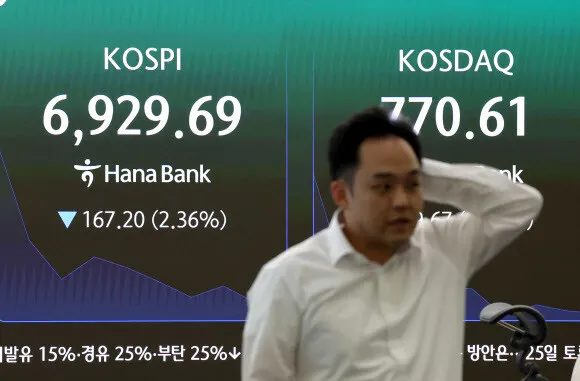
The KOSPI index has fallen below the 7,000-point mark. This decline signifies a notable downturn in the South Korean stock market. Further details regarding the specific reasons for this drop or its implications were not provided in the original text. The KOSPI, also known as the Korea Composite Stock Price Index, represents the overall performance of stocks listed on the Korea Exchange. Its movement is closely watched as an indicator of the health of the South Korean economy. A drop below such a significant psychological level as 7,000 points often suggests investor concerns about economic conditions or future market performance. The brevity of the provided information limits a deeper analysis of the contributing factors or the potential duration of this downward trend. Investors and market analysts will be monitoring future trading sessions for signs of recovery or further decline.
The decline of the KOSPI index below 7,000 points, while a significant numerical event, requires context on market dynamics and investor sentiment. Such a threshold breach may reflect broader economic anxieties, global market influences, or sector-specific challenges within South Korea. Understanding the underlying causes, whether macroeconomic shifts, policy changes, or shifts in investor risk appetite, is crucial for assessing the market's trajectory. Future performance will likely depend on the resilience of the Korean economy, corporate earnings, and the evolving global financial landscape. Investors are likely evaluating risk-reward profiles in light of this development, which could lead to strategic adjustments in portfolio allocations.
AI-generated to prompt reflection — not editorial opinion, not advice, not a statement of fact. How this works.