KP Assembly Speaker Sends Controversial Privileges Bill Back for Review Amid Public Outcry
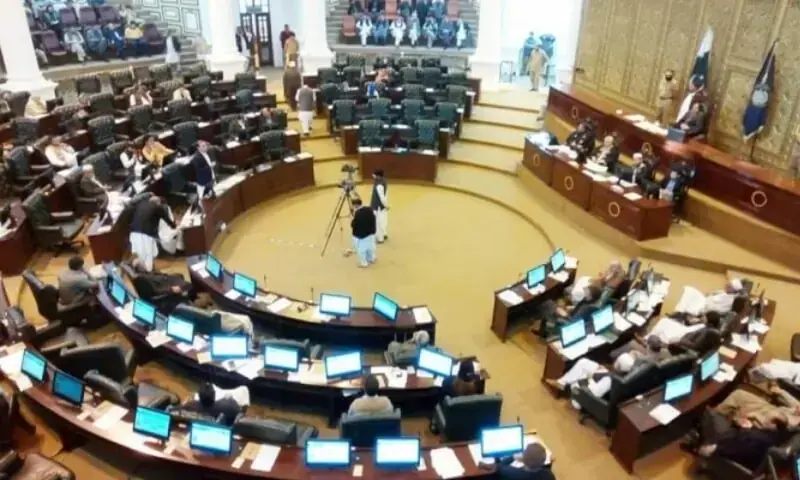
The Speaker of the Khyber Pakhtunkhwa (KP) Assembly, Babar Saleem Swati, has referred a controversial bill that expands lawmakers' privileges to the house's standing committee for review. The legislation, passed in April as the KP Provincial Assembly (Powers, Immunities and Privileges) Act, 2026, had drawn significant criticism from the media and the public. Key provisions included granting blue passports to members and their spouses, arms licenses, and blanket immunity from preventive detention, requiring speaker's permission for arrests on criminal charges. Following public backlash, KP Chief Minister Sohail Afridi ordered a review, and Information Minister Shafi Jan announced the withdrawal of controversial clauses. Jan stated that the standing committee would re-examine these clauses within one week, aiming to align them with the 1988 Act. He noted that most provisions were similar to the 1988 Act, with the exception of the blue passport clause, clarifying that the cabinet-approved draft did not include provisions for spouses or children, nor lifetime entitlement. The bill was signed by the governor on May 6 and gazetted on May 7 without initial objections. Jan also suggested the issue was being highlighted to divert attention from another political matter and asserted that similar amendments in Sindh and Punjab had not faced comparable public debate. He further stated that only 992 blue passports had been issued in KP, compared to approximately 56,000 nationwide, and called for transparency on passport data.
The referral of the KP Provincial Assembly (Powers, Immunities and Privileges) Act, 2026, back to committee reflects a dynamic interplay between legislative intent and public accountability. The initial passage of provisions granting enhanced privileges, such as blue passports and immunity, appears to have overlooked potential public perception and governance implications. The subsequent public and media outcry demonstrates the critical role of transparency and public trust in the legislative process, particularly concerning the allocation of state resources and immunities. This event highlights a recurring tension in governance models: balancing the need for legislative functional autonomy against the imperative of equitable public service and the prevention of perceived overreach. Future legislative frameworks may need to incorporate more robust public consultation mechanisms and clearer ethical guidelines to preempt such controversies, ensuring that the pursuit of lawmakers' privileges does not undermine public confidence or create systemic risks of entitlement.
AI-generated to prompt reflection — not editorial opinion, not advice, not a statement of fact. How this works.