KP Governor: Over 1,300kg of explosives used in deadly Tank checkpost attack
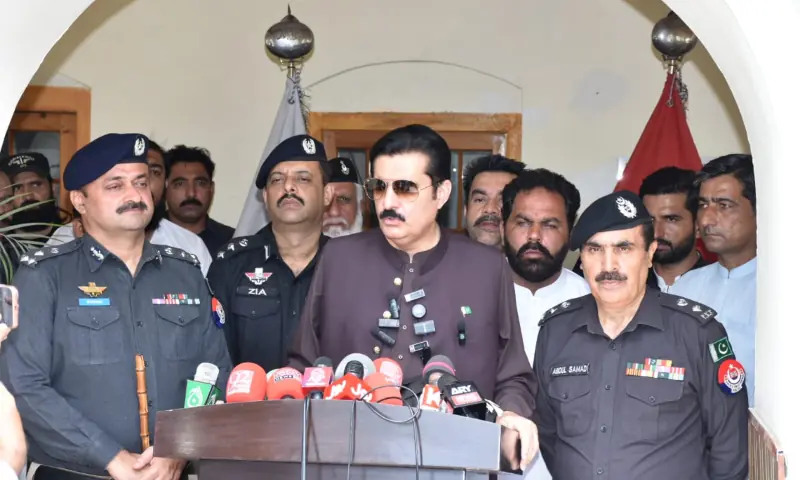
Khyber Pakhtunkhwa Governor Faisal Karim Kundi stated on Sunday that over 1,300 kilogrammes of explosives were employed in the recent attack on a Tank checkpost, which resulted in the deaths of 15 individuals, including 14 security personnel. Speaking to journalists in Dera Ismail Khan after a security briefing, Governor Kundi characterized the incident at the Manji Khel checkpoint as tragic, noting the martyrdom of personnel from the Pakistan Army, police, and forest department. He emphasized that the significant quantity of explosives used highlights the scale and sophistication of the terrorism threat. Governor Kundi called for a unified national strategy against terrorism, urging collaboration between federal and provincial governments, security forces, and the public to ensure lasting peace. He also pointed to external security challenges, suggesting India's use of Afghan territory via terrorist groups to destabilize Pakistan and the utilization of abandoned international forces' weapons in terrorist attacks within Pakistan, particularly in KP. Despite the attack, the governor affirmed the resilience of the province's people and security forces, stating that such incidents would not diminish their morale. He pledged to convey regional police recommendations to the federal government and discuss increased compensation for injured personnel with the Interior Minister. Governor Kundi also stressed the importance of closer coordination between Islamabad and Peshawar and the need for intensified intelligence-based operations in KP, which he would discuss with the chief minister. The attack occurred as security forces foiled an attempt to breach the checkpost perimeter, eliminating 12 terrorists before an explosives-laden vehicle was rammed into the wall, causing significant damage. This incident follows a recent foiled suicide bombing in South Waziristan and a broader deterioration of Pakistan's security situation in May, largely due to escalating violence in Khyber Pakhtunkhwa and Balochistan.
The substantial quantity of explosives used in the Tank checkpost attack underscores the evolving capabilities of non-state actors and the persistent challenge they pose to national security infrastructure. While the governor's call for a unified national response and enhanced inter-governmental coordination is a standard policy prescription, the underlying issue may involve systemic governance and resource allocation challenges that hinder effective counter-terrorism efforts. The governor's attribution of blame to external actors and the presence of abandoned military hardware raises questions about border security management and the efficacy of international aid in conflict zones. Moving forward, a critical examination of intelligence sharing mechanisms, the strategic deployment of resources, and the long-term socio-economic factors contributing to radicalization will be crucial. Addressing these multifaceted dimensions, rather than solely focusing on immediate security responses, may offer a more sustainable path toward regional stability in the coming decade.
AI-generated to prompt reflection — not editorial opinion, not advice, not a statement of fact. How this works.