Krakatoa Eruption: A Cataclysm That Shaped Scientific Understanding
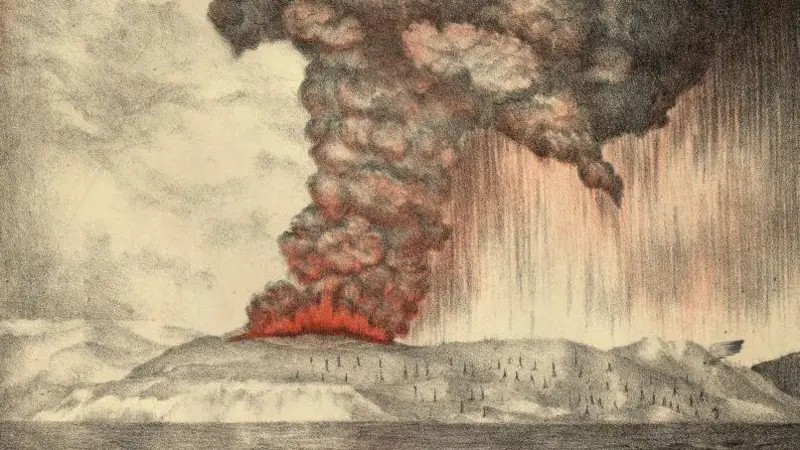
The 1883 eruption of the Krakatoa volcano in Indonesia is remembered as one of history's most devastating natural disasters, causing over 36,000 deaths and destroying 165 villages in under 48 hours. This cataclysmic event generated the loudest sound ever recorded, audible thousands of kilometers away, and ejected ash columns reaching up to 80 kilometers in height. The eruption's immediate aftermath saw massive tsunamis, responsible for the vast majority of fatalities, which submerged entire coastal towns. Survivors who fled to higher ground were still vulnerable to pyroclastic flows, rapid avalanches of superheated gas and volcanic debris. The ash cloud dispersed globally, creating vivid red sunsets and sunrises and reducing global temperatures by up to 0.5°C for approximately five years. This widespread atmospheric impact, observed by ships and documented by witnesses like Sidney Baker, significantly altered scientific understanding. The event provided the first clear evidence to humanity that a single geological event could have planetary-scale consequences, fostering an awareness of Earth as an interconnected system. This realization laid the groundwork for later concepts such as global warming and sea-level rise, fundamentally changing how scientists perceived the planet. The volcano Anak Krakatau, meaning "Son of Krakatoa," emerged in 1927 from the caldera of the original volcano and also experienced eruptions, including one in 2018.
The 1883 Krakatoa eruption serves as a stark reminder of the immense power of geological forces and their capacity to transcend local impact, affecting global climate and human perception. The event's scale necessitated a paradigm shift in scientific thought, moving from localized phenomena to a systemic understanding of Earth's interconnectedness. This historical precedent underscores the importance of robust monitoring systems for volcanic activity and the need for international cooperation in disaster preparedness. As the planet faces new environmental challenges, the lessons from Krakatoa highlight how understanding complex, interconnected systems is crucial for navigating future risks and fostering global resilience.
AI-generated to prompt reflection — not editorial opinion, not advice, not a statement of fact. How this works.