Ladakh Experiences Unseasonal Snowfall Amidst Monsoon Heat
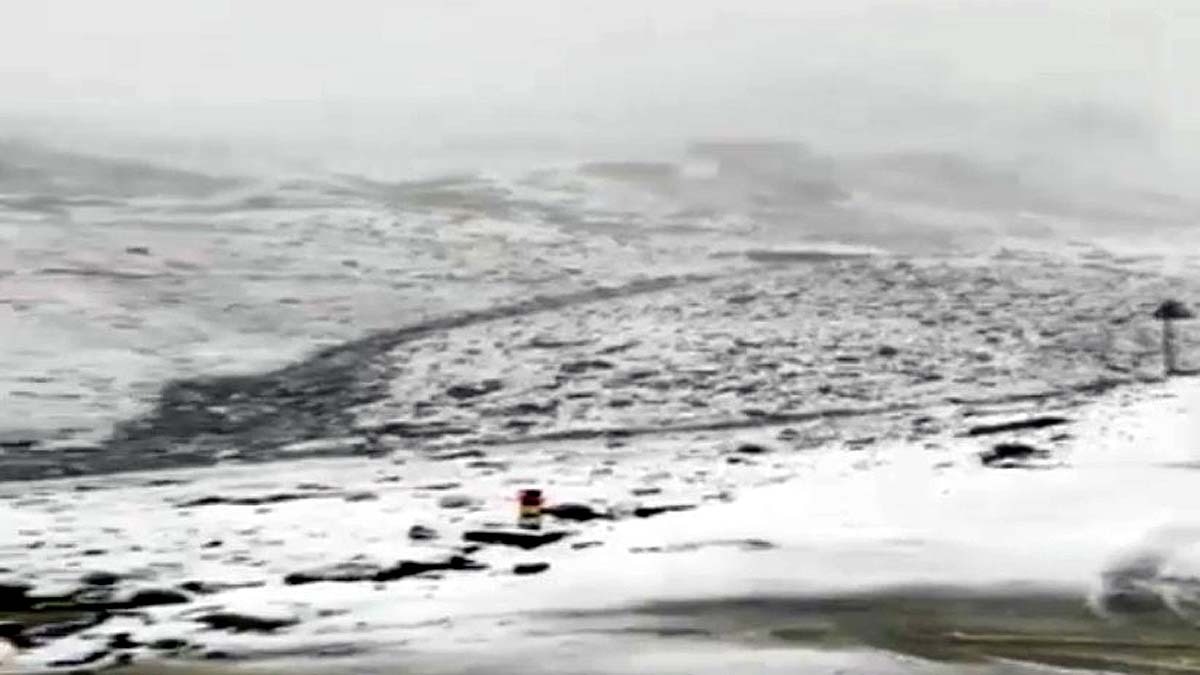
While many parts of India are grappling with high temperatures in July, Ladakh has witnessed a surprising snowfall at the Wari La Pass. This unusual weather phenomenon has drawn significant attention, raising questions about the reasons behind snow accumulation during the summer monsoon season. The contrast between the heat experienced elsewhere in the country and the cold snap in Ladakh highlights the region's unique climatic conditions. This event underscores the unpredictable nature of weather patterns, particularly in high-altitude regions like Ladakh. Further investigation may be needed to understand the specific meteorological factors contributing to this anomaly. The timing of the snowfall, during a period typically associated with warmer weather across India, makes this event particularly noteworthy. It serves as a reminder of the diverse and sometimes extreme weather that can occur across the vast Indian subcontinent.
The unseasonal snowfall in Ladakh during July presents a fascinating case study in regional climate variability. While the monsoon typically brings rain to much of India, high-altitude regions can experience complex weather interactions. This event highlights how localized atmospheric conditions can diverge significantly from broader national weather trends. Understanding the drivers behind such anomalies, potentially linked to shifts in jet streams or other upper-air patterns, is crucial for anticipating future climate impacts on vulnerable ecosystems and communities. The juxtaposition of monsoon heat elsewhere and snow in Ladakh prompts consideration of how climate change might be influencing the frequency and intensity of such extreme, localized weather events.
AI-generated to prompt reflection — not editorial opinion, not advice, not a statement of fact. How this works.