Lagos Building Collapse: 9 Dead, 27 Rescued from Shopping Center Debris
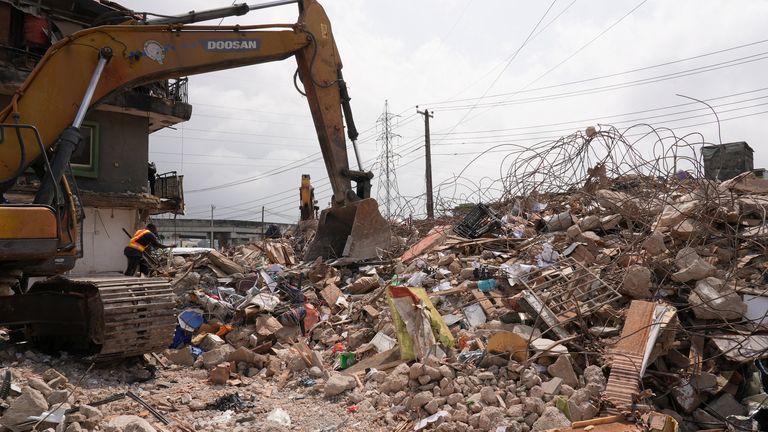
Nine bodies have been recovered and 27 individuals rescued following the collapse of a three-story commercial complex in Lagos State, Nigeria. The building crumbled on Thursday morning in Alakija, a rapidly developing satellite town along the Lagos-Badagry Expressway. Rescue operations, involving multiple agencies, concluded on Friday with the evacuation of all trapped individuals. Olufemi Oke-Osanyintolu, Permanent Secretary of the Lagos State Emergency Management Agency, confirmed that rescue teams worked around the clock to locate and extract those trapped beneath the rubble. The rescued individuals, suffering from varying degrees of injuries, were transported to local hospitals for treatment. Preliminary reports indicate that the majority of the victims were shop owners and customers engaged in daily commerce, with some residents from the adjacent neighborhood also caught in the disaster. The China Civil Engineering Construction Corporation, involved in a regional railway project, also contributed to the rescue efforts. The exact cause of the collapse remains undetermined, and an investigation has been initiated by local authorities. Building collapses are a recurring issue in Nigeria, often attributed by experts to aging infrastructure, disregard for building codes, and the use of substandard construction materials.
The collapse of the Lagos shopping center highlights persistent infrastructure vulnerabilities in Nigeria, often exacerbated by regulatory oversight failures and material quality concerns. While rescue efforts, including participation from the China Civil Engineering Construction Corporation, demonstrate inter-agency and private sector cooperation, the incident underscores the systemic risks associated with rapid urbanization and construction practices. Future urban development strategies will need to prioritize stringent building code enforcement and material testing to mitigate the likelihood of such tragedies. The ongoing investigation into the cause is crucial for identifying specific lapses and informing policy adjustments to enhance public safety and prevent recurrence in similar emerging urban centers.
AI-generated to prompt reflection — not editorial opinion, not advice, not a statement of fact. How this works.