Lahore Court Seeks Response on Plea Against Maulana Fazlur Rehman Over Remarks on Security Forces
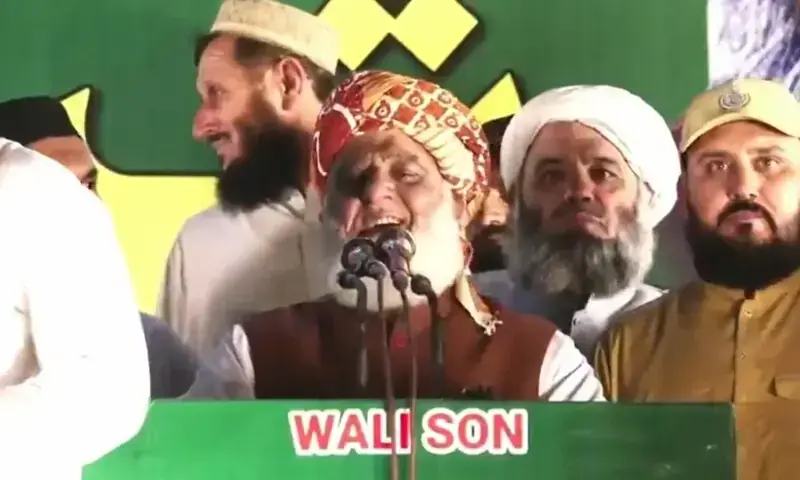
A sessions court in Lahore has issued a notice to the National Cyber Crime Investigation Agency (NCCIA) regarding a petition that seeks to file a case against Jamiat Ulema-i-Islam-Fazl (JUI-F) chief Maulana Fazlur Rehman. The petition alleges that Rehman made controversial and derogatory remarks about security personnel during a recent party rally in Kasur, Punjab. During his speech, Rehman commented on the security situation in Khyber Pakhtunkhwa and Balochistan, referencing soldiers' martyrdom and stating that security personnel receive salaries for their service to the country. The petitioner, citizen Mohammad Waqar, represented by Advocate Mudassar Chaudhry, argued that Rehman's speech, viewed on social media, deeply hurt the sentiments of the public and the families of martyrs. An earlier application filed with the NCCIA director yielded no action, prompting the current petition. The petitioner requests the court to compel the NCCIA director to register a case against Rehman based on his alleged remarks. The court has set August 17 for the agency to provide a response. Rehman's statement has already faced criticism from government ministers, including Defence Minister Khawaja Asif and Planning Minister Ahsan Iqbal, who deemed the remarks insensitive and a disregard for the sacrifices made by martyrs, violating ethical and Islamic principles.
This legal action highlights the complex intersection of political speech, national security narratives, and public sentiment in Pakistan. The core of the dispute lies in the interpretation of remarks concerning security personnel, framing their service either as a professional duty compensated by salary or as a sacrifice deserving of profound respect. The petition leverages cybercrime legislation, suggesting a potential digital dissemination of the controversial speech. This case could influence how political discourse surrounding sensitive topics like military sacrifice is regulated, potentially impacting freedom of expression versus the protection of national honor. Future legal frameworks may need to balance robust public debate with safeguards against speech perceived as undermining state institutions or public morale, particularly in a context of ongoing security challenges.
AI-generated to prompt reflection — not editorial opinion, not advice, not a statement of fact. How this works.