Lahore Paralyzed by Heavy Monsoon Rains, Causing Flooding and Road Collapses
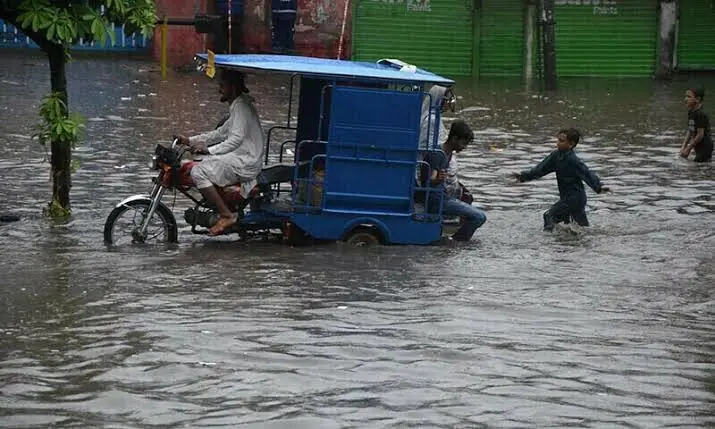
Heavy monsoon rains have inundated Lahore, Pakistan, causing widespread disruption to daily life and significant traffic delays on Thursday. The provincial capital received 343 millimeters of rain over the preceding 48 hours, leading to accumulations of three to four feet of water on streets, roads, and submerged underpasses in numerous areas. Major thoroughfares like Mall Road, Cooper Road, and areas within DHA Phases 1 to 5 experienced severe waterlogging, forcing the closure of the Ghazi and Masjid Chowk Underpasses and diversion of traffic. The deluge also exposed persistent urban drainage issues, with rainwater entering homes in low-lying neighborhoods and residents expressing frustration over the lack of official assistance in clearing their properties. Adding to the chaos, at least three to four roads, including Canal Road and Johar Town Main Boulevard, developed deep sinkholes measuring approximately 10 square feet, causing sections of the road surface to collapse. The Provincial Disaster Management Authority (PDMA) reported that across Punjab, 21 people have died and 154 have been injured due to rain-related incidents this monsoon season, with building collapses, lightning, electrocution, and drowning being the causes. The PDMA has placed district administrations on high alert for potential urban and flash flooding. Despite claims from the district administration and the Water and Sanitation Agency (WASA) Lahore of emergency drainage operations and full capacity at disposal stations, citizens criticized the annual recurrence of these problems, citing poor drainage, blocked sewers, and slow response times. WASA has deployed additional machinery and staff, established 24/7 monitoring via over 200 cameras, and opened emergency relief camps.
The recurring severe urban flooding and infrastructure failures in Lahore during monsoon seasons highlight a systemic challenge in balancing rapid urbanization with essential public works. While official agencies like WASA and PDMA report emergency measures and preparedness, the consistent public outcry and visible damage suggest a gap between stated efforts and on-the-ground effectiveness. This points to potential issues in the long-term planning, maintenance, and capacity of drainage infrastructure, as well as the responsiveness of emergency services to the scale of the problem. The appearance of sinkholes, in particular, may indicate underlying issues with road construction, utility lines, or soil saturation exacerbated by inadequate drainage. Future resilience will likely depend on significant investment in upgrading drainage systems, enforcing stricter building and land-use regulations, and developing more proactive, integrated urban planning that anticipates the impacts of climate change and extreme weather events.
AI-generated to prompt reflection — not editorial opinion, not advice, not a statement of fact. How this works.